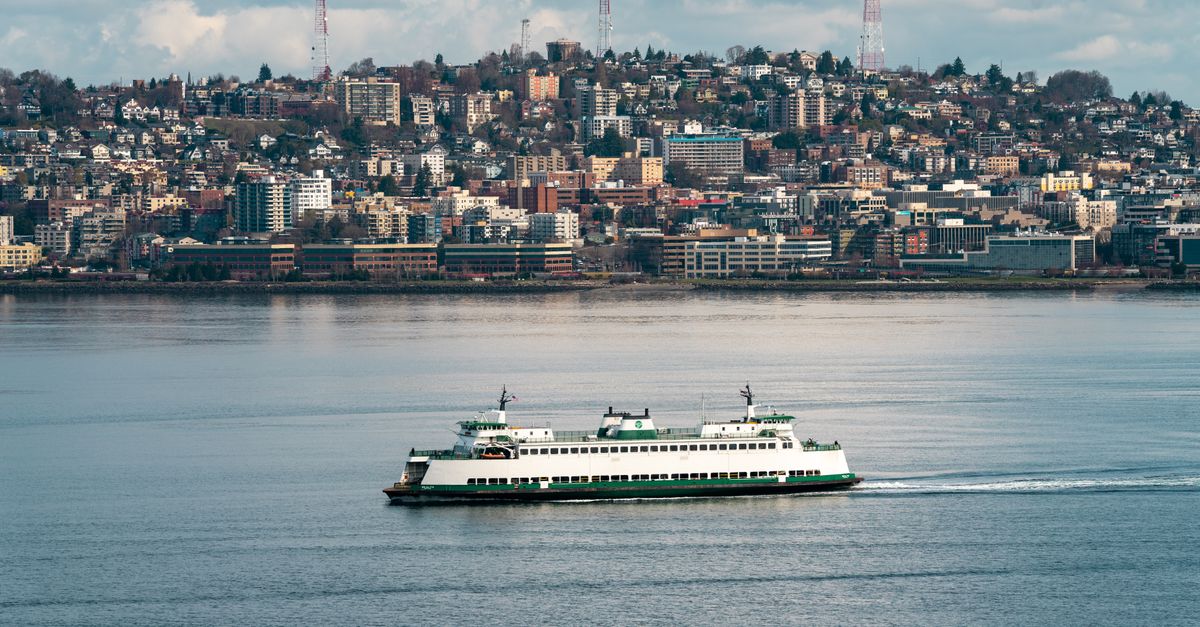
You drive onto a Washington State Ferry the same way you drive into a parking lot, except the parking lot floats and it is full of people who have done this a thousand times. For them, the boat is just another road. For you, on your first ride, it's a small event. Here's what actually happens, dock to dock.
The Holding Lane
You pay at the booth. The attendant hands you a receipt and points you toward a lane. On the busy routes — Edmonds to Kingston, Mukilteo to Clinton, Anacortes out to the islands — you might wait one sailing, sometimes two. That's normal. You put the car in park, turn off the engine, and get out if you want. People stretch. Someone walks a dog. The air smells like diesel and cold salt water. The waiting is not a delay. It's part of the crossing.
The Ramp and the Thud
When the boat comes in, the cars roll off in a long line. Then a crew member waves your lane forward. You drive up a steep metal ramp. The thud of the ramp settling under your tires is the sound of the trip starting. It's a heavy, hollow clang, not a gentle thing. You follow hand signals onto the deck. You park bumper to bumper. You set the brake. You leave the car.
Finding Your Spot
You can stay in your car on most boats, but you'll have to go back down for docking anyway. Better to go up. Stairs or an elevator take you to the passenger decks. There are booths with tables, long counters by the windows, and a galley.
The Galley
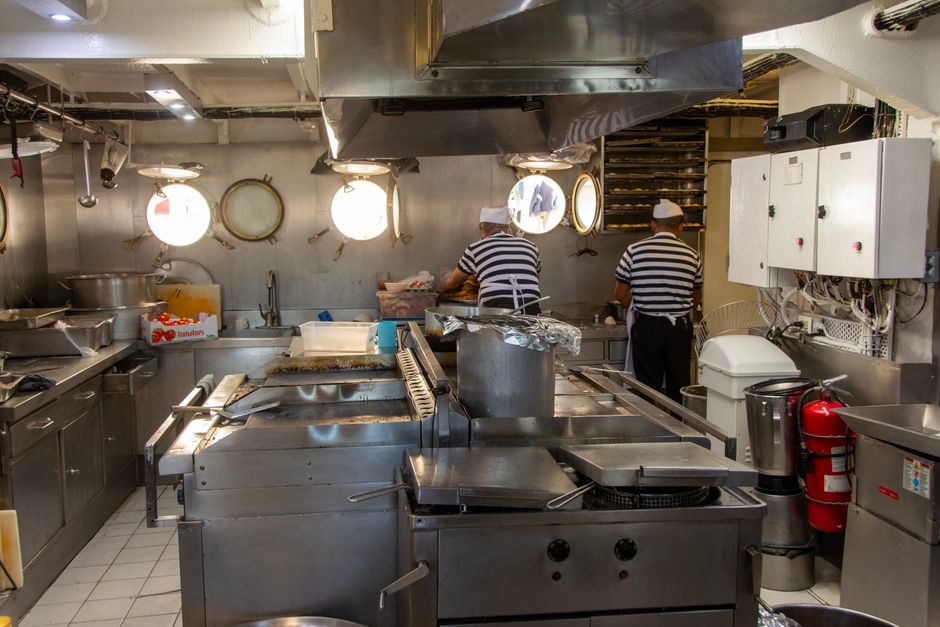
The galley smells like coffee, French fries, and clam chowder. The coffee is hot and honest. The chowder is a tradition on the longer runs. You can bring your own food — a thermos, a sandwich, a bag of oranges. Nobody minds. There are vending machines too, and a microwave on some boats. The tables fill up fast on the morning commute. On a sunny Saturday, the outside decks fill up first.
Passenger Deck Etiquette
If you're one person, don't take a four-person table on a crowded run. Don't put your feet on the seats. If you're on the outside deck, hold your hat. The wind off the Sound is stronger than it looks. Dogs are allowed on the car deck and on the outside passenger decks, not in the galley. Kids run. That's fine. It's a commuter boat at 7 a.m. and a tourist boat at noon.
The Vibration
You feel the engines through the floor. A low hum that gets into your feet. It changes when the boat slows. You hear water slapping the hull, the wind, the loudspeaker. The boat moves in a way that is nothing like a car. It's slower and steadier. If you're prone to seasickness, sit low and toward the middle, and look at the horizon. The crossing is usually short enough that it doesn't matter.
Docking
The engines reverse. The vibration changes again. A voice tells you to return to your car. You go down the stairs, stand by your car, and wait. The boat bumps the dock. The ramp comes down with the same thud. You drive off. You're on a road again.
A crossing is twenty minutes to an hour. That's a chapter, or a whole short story. If you want something with family tension and a slow reveal to read while the water moves under you, try My Brother Kept Our Mother's Hearing Aids Dead to Steal Her House. He Forgot I Was Her Nurse for 40 Years.. It's about a daughter who cared for her mother for forty years, and a brother who thought he could rewrite the story. It fits a ferry ride — quiet, watchful, and full of details that matter.
For more stories with that coastal feeling, the Seaside & Coastal shelf is a good place to start. Or if you like family stories where the past comes back around, the Family Saga page has more. Either way, bring a book. The ferry is a good place to read.