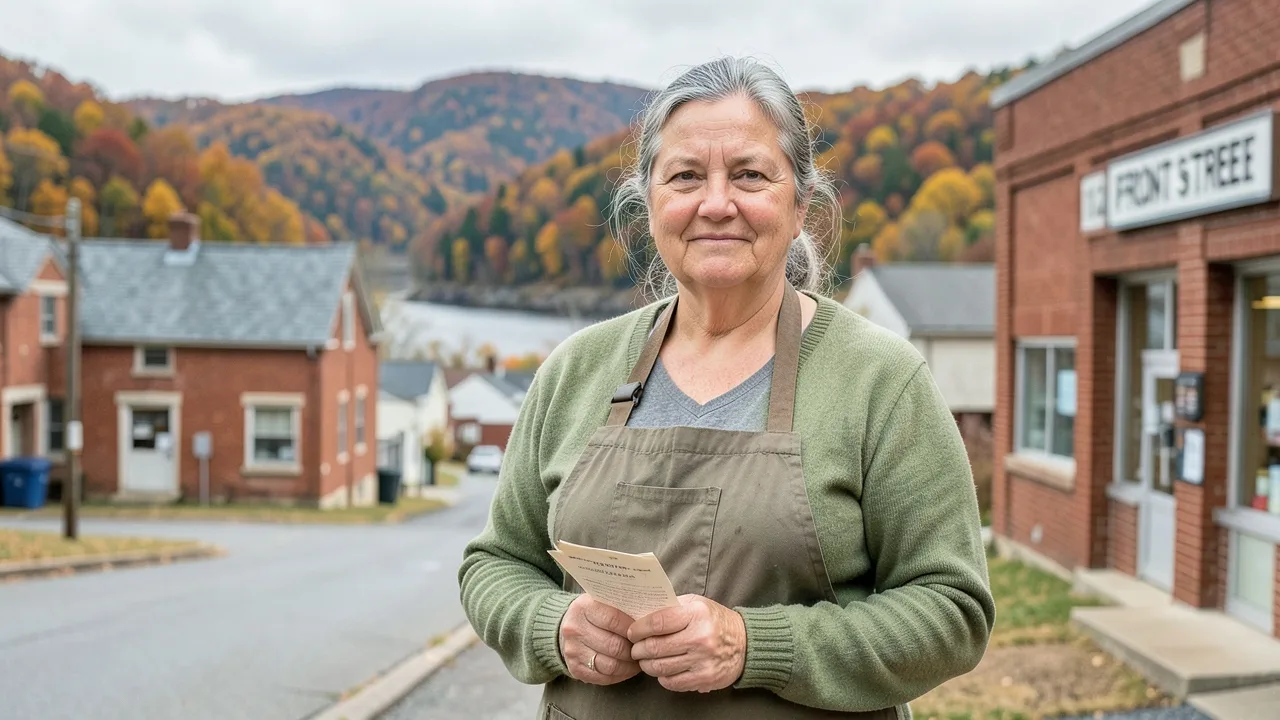
The new manager gave me until October 15 to clear my repair bench out of the back of Fenwick's Hardware, and the deed to the building was in my kitchen drawer.
He said it on a Saturday in August, with a brass floor lamp in pieces in front of me and an old man watching my hands. I had the cord stripped halfway.
I should tell you what Bryce Heisey didn't know. I own Fenwick's. In 2013 I bought the business and the brick building at 112 Front Street through a company called Keel Street Holdings, and the deed sits under the dish towels in my kitchen drawer on Locust Street. My father sold his trucking company and left me about $19 million, and a trust company in Harrisburg has turned it into about $24 million. I ring up nails at $17 an hour.
My husband Dale made me promise, in 2011, with the hospice nurse out of the room. Sawyer was not to know about Daddy's money until he turned thirty. Dale had watched that money hollow out my brother, and he wanted our boy to make his own way. So I told Sawyer it all went to nursing care and debts, and I kept my mouth shut for fifteen years.
"Gretchen, a minute," Bryce said that Saturday, tablet under his arm. He called everybody by first name from his first morning.
"I'm in the middle of a wire, Bryce."
"I see that. Mr. Dorrance, good to see you." Ansel Dorrance, eighty-one, nodded from under his flat cap. He had carried that lamp in from Water Street in both arms, the way he carried everything. It was his late wife's. "Here's where we are. Free repairs are over. Paid repairs start at $25. And the bench comes out after the owner's review on October 15. I'm putting pet food in that corner."
"Well, now," I said. "That's fourteen hours a month I'm giving this town, on my own time."
"Which I'm paying for. That's the problem."
Ansel set his hand on the lamp's brass neck. "I won't be anybody's charity, young man."
"Ansel, it isn't charity. I've done your lamp before."
"Not the way you mean." He lifted it, cord dragging, and carried it out the front door unfixed.
I stood at the bench with the wire strippers in my hand. Eleven years of Saturdays I had listened to that man tell me about signal towers and the night the Altoona line went dark. I did not know what I'd do with the mornings.
Nearly four weeks went by, with Bryce counting facings and Sawyer, my own son, trotting after him with a clipboard, tucked in.
On Thursday, September 10, Bryce called me into the office behind the paint counter. It had one table and four chairs. A sheet of paper lay squared on the table.
"Unauthorized free labor," Bryce said. "Fourteen hours a month. About $2,900 a year, Gretchen. It goes in your file."
"It's my Saturday morning."
"It's the store's bench, the store's electricity, and the store's cord." He turned to Sawyer. "Sign as witness, please."
Sawyer signed. He did not look at me. He has Dale's big hands, and the pen looked small in them.
I found him in the stockroom afterward, breaking down a pallet of birdseed. "Sawyer."
"Not here, Ma."
"You called me Ma."
"Because nobody's in here." He kept his eyes on the shrink wrap. "Please stop making it hard for me. I'm helping with the plan for the review. If the store goes, I've got nothing. I've got a $9,000 car loan and an apartment over a laundromat."
"I'm not trying to make anything hard."
"Then stop."
That Sunday I made pot roast and set two plates. At half past six I put his back in the oven, and at eight I wrapped it in foil. He didn't call. In fifteen years of Sundays he had never once skipped.
On Saturday, October 3, Bryce posted the fall schedule on the corkboard by the time clock. I found my name at the bottom. Next to it, in his small square print, were the words *pending owner review*. My Saturday shift had Tilda's name over it.
Tilda stood at the corkboard with a tissue balled in her sleeve and her bifocals pushed up in her permed hair. She had ridden to work with me for nine years.
"Hon, I didn't ask for it."
"I know you didn't." I took the pen off its string. "Well, now. I'm going to say my piece at that review. Bryce won't be the only one in the room with something to put on the table."
Her face changed. "Don't. Gretchen, please don't."
"Tilda."
"You've got Dale's pension. I've got a roof that leaks and a husband on a small check. Those Saturday hours are the roof." She tugged the tissue free and didn't use it. "If you fight him, he cuts the easy ones first. You know he does."
I could have fixed her roof that afternoon, and I couldn't say so. Nobody has ever been so lonely at a corkboard.
"I'll ride in with my husband from now on," she said. "It's easier."
She walked back to her register. I watched the back of her cardigan the whole way.
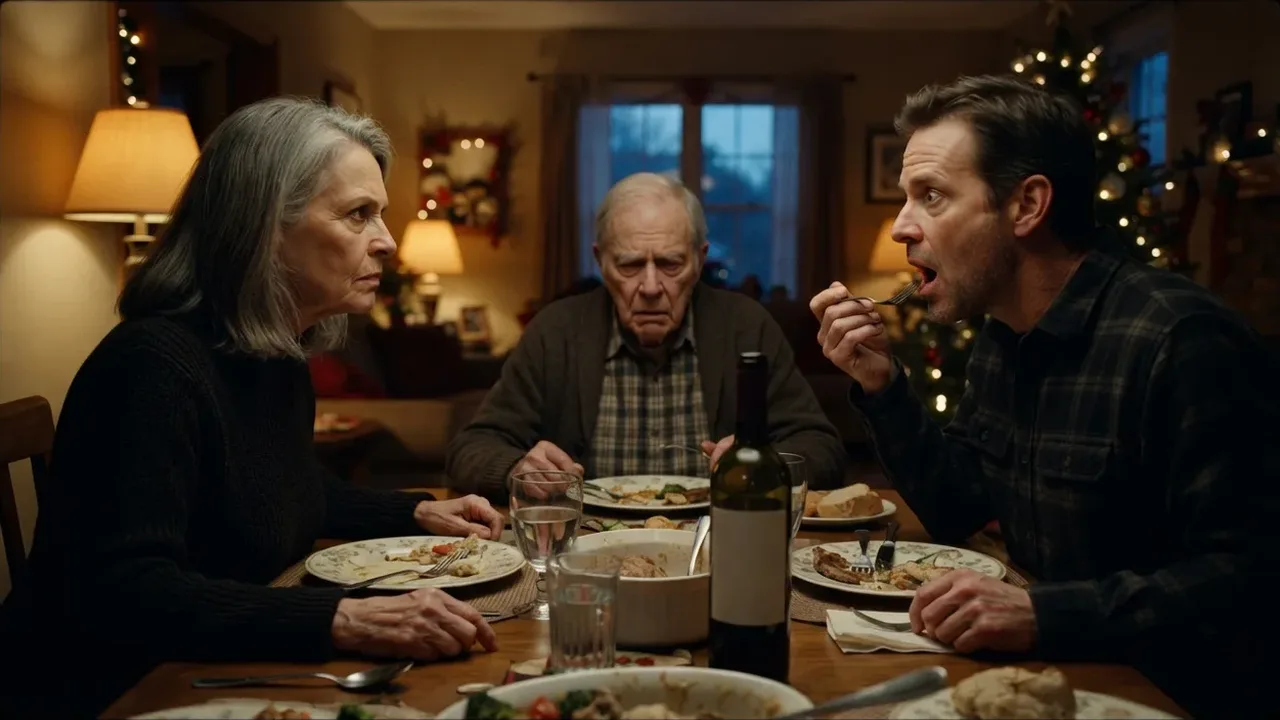
I learned of the Huntingdon job from my son on Sunday, October 11, across my own kitchen table, at the first supper he'd come to since the skipped one.
He ate the pot roast without a word. Then he said it all at once.
"Bryce told me Thursday. Buckwalter's offered him Huntingdon, forty miles west. If the owner backs your bench, he's taking it. And he'll make me his assistant." He pushed a carrot around. "I'm going with him, Ma. I'm not staying at a store where my own mother is the dead weight."
"Is that what I am?"
"It's what the numbers say."
"Numbers can say a lot," I said, and I rinsed the dishes, because my hands needed something.
That night I took the deed out from under the dish towels and sat with it at the table. Under it was the operating agreement with my name as sole member, in my own hand. A promise for Sawyer's sake had turned into a reason for him to leave. Tilda was scared of a deadline I had set myself. Ansel had a lamp sitting dark on Water Street. I decided around midnight and put both papers in my purse.
The four chairs in the office were arranged the way Bryce likes, the plan on the table in a blue folder, Tilda's register totals by day of the week stacked beside it. On Thursday, October 15, Bryce, Sawyer and Tilda were already seated when I came in. The door shut behind me. Out on the floor somebody was running a key machine, and I could hear the register drawer.
I took the fourth chair.
"Gretchen," Bryce said, friendly, "this meeting is for the owner. We'll find you after."
"The owner's here."
I unfolded the deed first and laid it on the table, then the operating agreement beside it, with the page of signatures turned toward him.
"Keel Street Holdings owns this store and this building," I said. "I'm its only member. The December deadline you've been working to is one I set in April."
Nobody moved. Tilda's tissue stopped halfway to her nose.
Sawyer spoke first, low. "Ma. Grandpa Rudd's money. Did it really go to the nursing home?"
"No."
"You told me it did. I put my weekends into that car loan. I took the Sundays you handed me and worked every Saturday so I wouldn't have to ask you." He looked at the table. "I haven't got anything to say."
"Sawyer, I—" I reached across the corner of the table, and he drew his arm back into his lap.
"You let me beg you for hours you didn't need," Tilda said. Her voice shook. "Gretchen, I stood at that corkboard and begged."
"I know you did."
"Nine years in your truck." She shook her head. "I don't know who I was riding with."
Bryce had been looking at the deed the whole time. Now he opened his folder, slowly, and took out two sheets and laid them on top of my papers. One was a letter on Buckwalter's letterhead. The other was typed, and signed in his quick hand.
"My resignation," he said. "Effective today. And the Huntingdon offer, signed and waiting on me." He kept his eyes on me. "You've watched all of us for thirteen years from behind that register, and you can run your own store four days before the busy season with no manager." He turned his head. "Sawyer, the assistant's job there is yours if you walk out with me right now. Make your own way. Nobody's boy."
My son stayed where he was. I counted my breaths until I knew what I would do, and then I picked up a pen from the table, flipped the operating agreement over, and wrote on the back of it.
It took me about ten minutes, and nobody said a word. First I wrote that the manager of Fenwick's Hardware had sole authority over hiring, firing and schedules for every employee, including Gretchen Albaugh and Sawyer Albaugh. Under that went the break-even deadline and the bonus, moved to December 31, 2027. Last, I limited the owner's role to the year-end numbers. I signed it as sole member and slid it across the table to him.
"I won't sit at this table again except once a year," I said. "Sawyer, from now on nobody can call you the owner's boy. The owner has no say over you."
Sawyer's jaw worked, but he stayed quiet.
"The bench is yours to decide, Bryce," I said. "I only ask that you look at Tilda's Saturday totals first."
He went down the page from the top again, slower than the first time. His face worked.
"You've taken my excuse," he said. "I could tell myself it was an owner in Harrisburg cutting the bench. If it goes now, that's me." He put the resignation back in his folder. He signed the amendment at the bottom, under mine, and capped the pen. "I'll count Saturdays myself."
Nobody apologized. Sawyer stood, pushed in his chair, and went out through the door without looking at me. The key machine kept running out on the floor.
On Saturday, October 24, I came in at a quarter to eight and found Bryce at the repair bench with a hammer, hanging a sign he'd lettered by hand on a piece of white board. *Repairs, 75 and over, no charge, Saturdays 8 to noon.*
"I counted three Saturdays of Tilda's totals," he said, not looking at me. "Most of her day is people who came in for the bench and bought something on the way out. Hinges, extension cords." He took a folded sheet from his back pocket. "This is your write-up. I pulled it from your file. And your full-time hours are back on the schedule."
"Thank you."
"Don't." He gestured toward the paint corner. "I've moved the pet-food aisle in there. It's slow money, and I'll be stocking it on my own time through November."
Sawyer had come up behind him, his polo tucked in, keys on his belt loop. Bryce took the Buckwalter's letter from his folder, picked the cordless phone off the paint counter, and dialed the Huntingdon number while we both stood there.
"This is Bryce Heisey, calling for the Buckwalter's manager's job. I'm staying on at Fenwick's, so I'm turning the job down, and I wanted you to hear it from me." He listened. "Yes. Thank you. Good luck with the search."
He hung up. Sawyer's voice came out thin. "You told me we'd go together."
"I did." Bryce faced him. "Huntingdon paid $6,000 more a year, and my wife wanted to be nearer her mother. I'm giving that up because here the call is finally mine. You can stay on as my assistant, or you can apply over there on your own name."
Sawyer looked at the sign on the bench for a good while.
"I'll stay," he said. "For now." He walked back to the floor.
Mid-morning Ansel came in for furnace filters. He passed the bench without turning his head and went to the front register with his cap pulled low.
I left the bench and met him there.
"Ansel. I need to tell you something myself." He waited, one hand on the counter. "I own Fenwick's and this building, and I have for thirteen years. I kept it quiet because I made my husband a promise. The bench is open again. No charge."
He took off the cap and held it against his shirt. "I thought I knew who I'd been talking railroads to for eleven years."
"You did."
"Hm." He put on the cap and went out with his filters. I thought that was the end of it.
He came back in forty minutes, carrying the brass lamp in both arms. He set it on the bench and laid a twenty and a five on the wood beside it.
"Ansel, it's free for you."
"No, ma'am." He slid the bills toward me. "You're not the girl who fixes things for nothing anymore. You're the lady who owns the place." He tipped his head. "Mrs. Albaugh."
It was the first time in eleven years he had not said *Gretch*.
I rewired the lamp. I took his money.
By the next Sunday the whole of Larkin Run knew, because Larkin Run does. I was the rich lady at the bench now. People I'd rung up for years asked how I was doing in a different voice. Tilda was kind to me at the register and still got out of her husband's car each morning. Sawyer stayed on under Bryce and called me nothing at work. He had not come to supper.
On Saturday, October 31, a paper cup of coffee appeared at my elbow. Black, one sugar, the way his father took it.
Sawyer didn't sit. He stood with his thumbs hooked in his belt.
"I'm paying off the car loan myself," he said.
"All right."
"And I've got one question." His eyes were Dale's. "Did Dad know?"
"It was his idea," I said. "The promise. He watched what it did to my brother."
He nodded slowly. "I'll think about supper."
He went back to the floor, and I wrapped my hands around the cup. I had lost the ease I used to have with him, and I knew it. I had kept him near enough to bring me coffee, and I would not have traded a minute of it back.
That night I laid the deed in the kitchen drawer, and for the first time in thirteen years I left the dish towel hanging on the oven door.
Comments