Four acres of sorghum cane stood ripe in my bottom field, the frost was a month off, and the only man who knew how to run my grandfather's press with me was moving to Ohio. Fugate's General Store had shelved 120 quarts of our syrup every fall since the fifties, and if I couldn't work that mill, my son would have it sold.
Elbert told me on a Monday, in the mill shed, with his cap in both hands.
"I hate it, Pearl," he said. He studied the three iron rollers instead of me. "My knees are done. Dorothea's got a room ready in Columbus. I go Saturday."
I had known he was old. I hadn't known he was leaving. For twenty-two years we had cut the cane in September, fed it through that 1946 mill on the old Ford's belt, and boiled the green juice down in the copper pan over a wood fire, and it takes two people at the least.
"Well," I said. "You'll want your wages."
"No, ma'am. I never cut a stalk this year."
"Wait here."
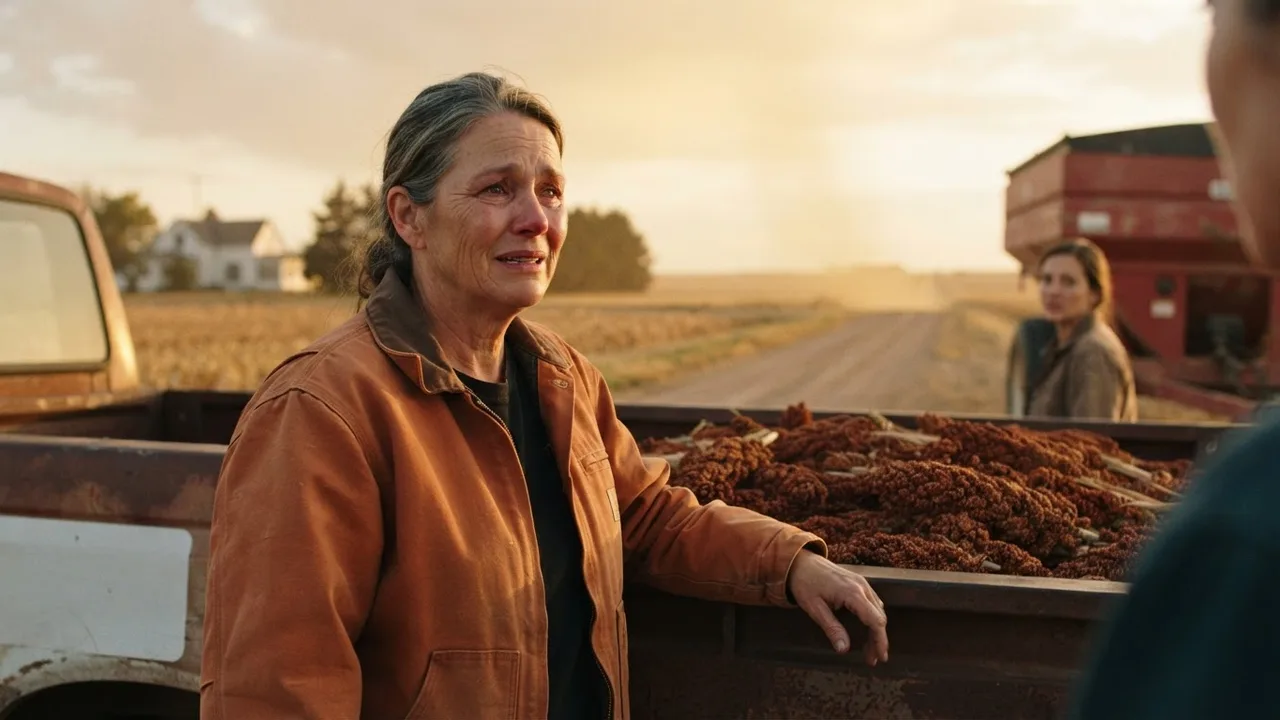
I walked up the track to the house, took the Folgers can down from over the refrigerator, and counted out eleven hundred dollars. It was the cutters' money. I had set it aside in August for boys to hire, now that neither of us could swing a corn knife all day. I counted it twice at the kitchen table and walked it back down in the pocket of Arvel's barn coat.
"Pearl, I can't."
"It's your season wage. Take it, or I'll stuff it in your bibs myself."
He took it. His big hand shook around the envelope, and he said "I hate it" once more, and I told him to go eat his daughter's cooking and get fat. Then I stood alone in the shed with the belt hanging slack and an empty coffee can up at the house.
Brent drove up the Sunday after Elbert left. I had cornbread coming out of the oven, turned from the old black skillet onto a plate, the way I'd done it since I was a bride. My son sat at my table in his company polo and clean boots, keeping his truck keys laced through his fingers, and he did not touch it.
"Mom, listen. A collector in Ohio will give you thirty-five hundred dollars for Granddaddy's mill. He may send somebody out to look at it."
"It's not for sale."
"You've got four acres standing and no press hand."
"Elbert's gone to Columbus. I'll manage."
"You can't manage it. You said yourself it takes two."
"You never could either," I said. "You'd stand in that shed checking your phone."
That landed. He got up, and the keys jingled in his fist.
"Dad told it for thirty years, how you wore his barn coat to church one whole winter out of plain stubbornness. It's the same thing, Mom. You're doing it again."
"I reckon."
He was back on the road to Lexington before supper. I set the skillet on the stove with half the cornbread still in it, and I thought, in passing, that nobody had scraped that skillet clean since the winter a hungry boy ate at my table every night. I had called him Skillet. He went off to Ohio with his daddy in the spring. Then I looked out the window at the cane and thought of it again.
A week of cutting alone gave me half an acre down and blisters through my gloves. That Tuesday I drove the five minutes to Fugate's and stood at the counter while Bonita rang up a man's lottery tickets and talked to us both.
"Thirty quarts," I told her when he'd gone. "Maybe. Not a hundred twenty."
Bonita let her reading glasses drop onto their beaded chain.
"Oh, Pearl, honey. I have to order Tennessee syrup this week. I can't have that shelf sitting empty, folks come in from three counties for it."
"I know it."
"Your family's had that shelf since the fifties."
"I know that too."
She squeezed my arm over the register and said she was sorry, and she was. Two women from my church were in the canned-goods aisle, and both of them found something interesting on the floor. I had been the Cornett who always came through, and I carried my sack of lamp oil out to the truck like somebody leaving a funeral.
On Saturday I was stripping leaves in the bottom field when a gray-bearded man in a faded green FFA jacket pulled off the creek road. He walked my rows with his hands in his back pockets, as if pricing them, and then he went into the mill shed and took pictures of my grandfather's press with his phone. I came up behind him with the corn knife still in my hand.
"How old is it?" he asked.
"Built in 1946."
"And the acreage?"
"Four, minus what's down. If you're Brent's man, it isn't sold yet."
"How many gallons does it make a season?"
"Depends on who's feeding it."
He looked at me for a long moment, and he laughed low in his chest, a short laugh with no mirth behind it. I took it for the laugh of somebody who'd found his bargain.
"I may be back," he said.
His boots were caked with red mud, and he walked out to his truck slowly, looking over his shoulder at the shed. I didn't like how he eyed the mill. I liked even less how he looked at me.
Brent came again on Friday, keys out, and I met him at the porch steps. I had told him on the phone that week that I'd cut half an acre alone.
"Your man was in my shed last Saturday," I said. "Took pictures of the press and never said a word to me."
"Mom, the collector didn't send anybody."
"Somebody was in my shed."
He rubbed his face. "I don't know who it was. Listen, the frost's forecast for the eighteenth. You've got half an acre down and nobody to press it. I can't watch you do this."
I stood there on my own steps with my back foot taking all my weight. I had not slept a whole night since Elbert left, and the cane was still standing, and I was too tired to be proud.
"Then sell it," I said. "After the frost."
"I'll call him on the twelfth."
He hugged me, which he rarely did, and drove off. I sat in the kitchen with the light off and thought about my grandfather's hands on those rollers, and about a man I'd never seen before who had stood in the shed pricing it.
That Sunday, late in the afternoon, I was shelling the last of the pinto beans on the porch when a truck I knew turned up my drive. The gray-bearded man got out and came to the bottom step. He took off his cap.
"Mrs. Cornett, I'm not the collector's man."
"Then you've got no business in my shed."
"My name is Lamar Spurlock."
It meant little to me. I turned it over like a seed. "Spurlock."
"You used to call me Skillet."
I put the bowl down. I remembered a boy, all wrists and Adam's apple, with a cowlick he wet down every morning on the school bus. I looked at this broad gray man with the muddy boots and could not lay the one over the other.
"The Spurlock boy went to Ohio with his daddy and never wrote," I said. "You've got the wrong porch."
"Daddy's pride wouldn't let us." He turned the cap over. "You told me a boy who scraped the skillet was doing you a favor, because it saved you washing it."
My hands went still in the beans. I had said it low, across my kitchen table, to one boy. Arvel was in the cemetery. Nobody else living had heard it.
"Well," I said. My voice came out smaller than I liked. "Sit down, then."
He sat on the step below me and told it plainly. Bonita had posted at the store that there'd be no Cornett sorghum this fall. His cousin Orville, in Laurel Fork, had heard him tell about the woman who fed him one winter, and shared the post with *Isn't this your Pearl?* Lamar had driven the forty miles to see the field for himself.
"I didn't say who I was," he said. "I didn't know if you'd remember me. And I couldn't promise you anything until my principal and the parents said yes. They did, Thursday. I have fourteen students, Mrs. Cornett. Permission forms signed. We can cut on the sixteenth and press on the seventeenth, and boil."
"No."
"Ma'am—"
"I won't take charity, and I won't have children worked for my troubles."
He took that without arguing. He looked out past my truck at the bottom field and said, "It isn't for you. It's for them. Nobody in my county presses sorghum anymore. My kids have seen it on video and that's all." He turned and looked straight at me. "You never once let me feel like charity. Every night you said I was doing you a favor. Let me do the same."
The beans sat in the bowl. A crow went over, complaining. I thought about Granddaddy and the four acres, and the Tennessee jars waiting on Bonita's shelf.
"I run the mill," I said. "I teach them right or not at all. I pay them in syrup. And your FFA buys forty quarts at the store price."
"Yes, ma'am."
"Don't you ma'am me, Skillet."
He laughed, low, and put his cap back on. That evening I phoned Brent and told him to hold off the collector, because a teacher was bringing fourteen students to cut my cane. "A teacher, Mom?" he said, and I said I reckoned so and hung up before he could ask more. On Monday I told Bonita at the store, and she said she'd believe it when she saw children with knives.
On Friday they came in a yellow bus and two trucks, fourteen of them in work gloves too big for half of them. I walked the rows ahead of them with my corn knife and showed them how to strip the leaves downward, how to top the stalk where the sap goes sour, how to lay it so the butt ends all face one way. A girl with a braid like mine asked why I didn't just use a machine. I told her the machine had never made syrup worth eating. By dark three and a half acres lay cut on top of my half, and I couldn't feel my own feet.
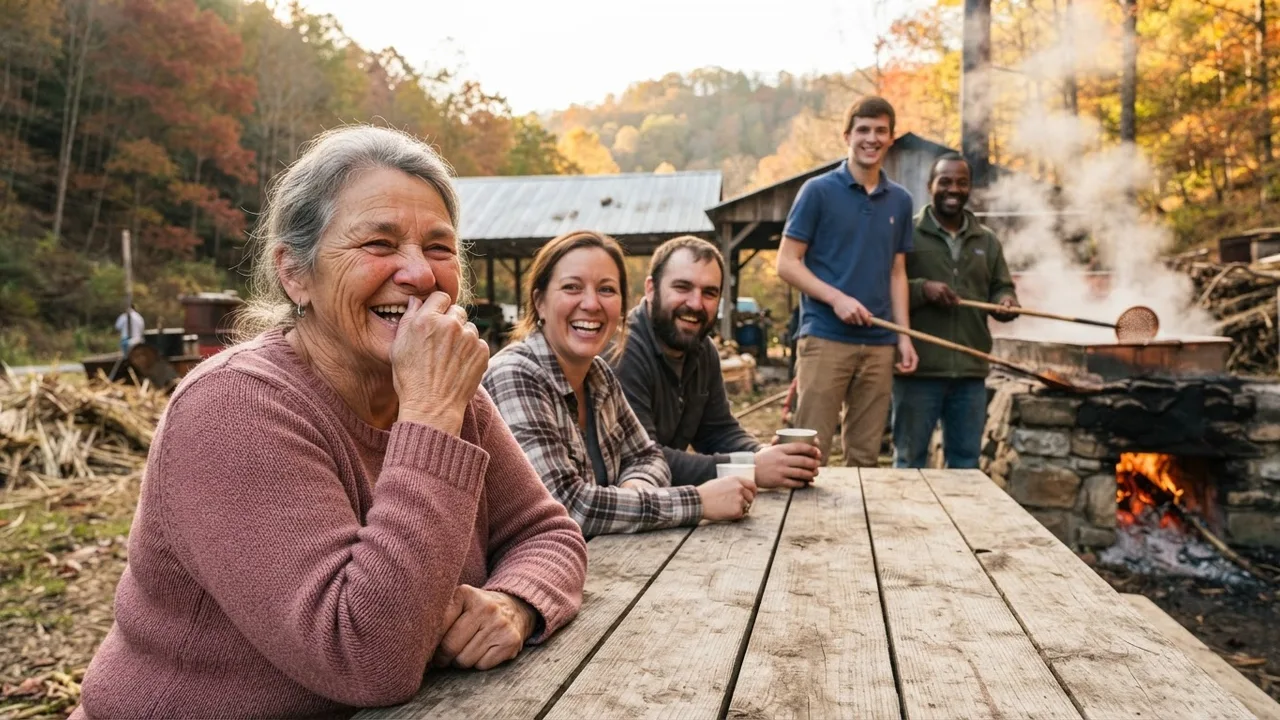
Pressing day was cold and clear. The old Ford coughed and caught, the belt took hold, and the rollers began to turn the way they had turned since 1946. Boys fed the stalks in, the green juice ran down the spout into the buckets, and a girl stacked the crushed stalks as if somebody had told her it mattered. I stood at the mill and said "Slower" and "Not your sleeve, honey" and "That's it" until my voice was a rasp.
By evening the fire was roaring under the long copper pan, the first juice was going from green to gold, and the students were stacking wood and sweeping the shed. I was skimming foam when I heard a truck on the dirt track. Brent got out in his company polo and stopped at the edge of the firelight, looking at the strangers' children, the cut field and the bus.
He came to the pan. Lamar was standing across from me with a skimmer, and Bonita had just walked down with a crate of empty jars on her hip.
"Mom," Brent said. "On the phone you said a teacher. You didn't say who he was, or why you'd let a man you don't know do this."
"I know him," I said.
"From where?"
I looked at the pan. I had made a promise to Arvel and kept it thirty-eight years.
"The winter your daddy's hours got cut at the sawmill, this boy's daddy was laid off from the mine. The boy came to my table every night from November to March. I fed him beans and cornbread and sorghum, and I put my coat money into the groceries to do it." I turned the skimmer over in my hand. "That barn coat your daddy joked about for thirty years is the coat I did without. I told everybody I liked it. We kept it quiet so Delbert Spurlock wouldn't be shamed in this town."
The fire popped. Bonita set the crate down very softly. Lamar put his skimmer on the edge of the pan and stood there with his big hands open.
"You told me you liked that coat," he said.
"I did like it. By March."
He looked down at the ground and pressed the back of his wrist to his nose. Nobody spoke. Out in the dark a boy dropped an armload of wood and said a word he shouldn't have, and nobody told him so.
"Brent," I said. "I can't run this mill alone anymore."
I had not said it aloud to anyone, and the sentence cost me more than the coffee can had.
"I'm not selling it. Lamar's class will come every October, and I'll teach them. That's how it's going to be."
"Mrs. Cornett," Lamar said, "let me pay for the shed roof. It's leaking, I saw it."
"No."
"I've got it to give."
"You'll pay me in hands," I said.
Bonita took her glasses off the chain and wiped them on her apron. "I'll put Cornett back on the shelf beside the Tennessee jars," she said, "and take sixty quarts, and let folks taste the difference."
Then Brent cleared his throat. He was looking at the stone furnace, at the crack in the mortar by the flue door.
"I wanted you to quit because I'd picture you out here at the pan at midnight. Alone. Two hours from me." He turned the keys over. "I called the collector from the car on the way up and told him no. I'd given him my word, and he wasn't happy about it. And I'd been going to put that thirty-five hundred toward a new furnace for you."
"Well," I said. "That one's got another year in it."
"Mom, I'm taking the third week of October off. Every year. Put me down."
He put the keys in his pocket, where I had not seen them go in all the years since he'd left home, and took the spare skimmer from its nail. He stepped up to the pan beside Lamar and the two of them skimmed side by side, a tall soft man in a polo shirt and a gray one in a green jacket, neither saying a word. I stood between them and let the steam hit my face.
The first pan was drawn off that night, dark gold, thick enough to coat a spoon. The students came back the next Saturday to finish the boil, and each of them took home a pint. Bonita got her sixty quarts, and the FFA chapter got its forty at the store price.
Late on pressing night the students were asleep on the bus and Bonita had gone home with her jars. I went up to the house and came back down with the black skillet and the last of the supper cornbread, and I handed it to Lamar by the furnace light. He sat on an overturned bucket and scraped it clean with the side of his fork, every crumb, the way he had at twelve.
Out past the fire, the bottom field that had stood ripe at the start of it all lay cut to stubble, waiting for the frost.
Comments