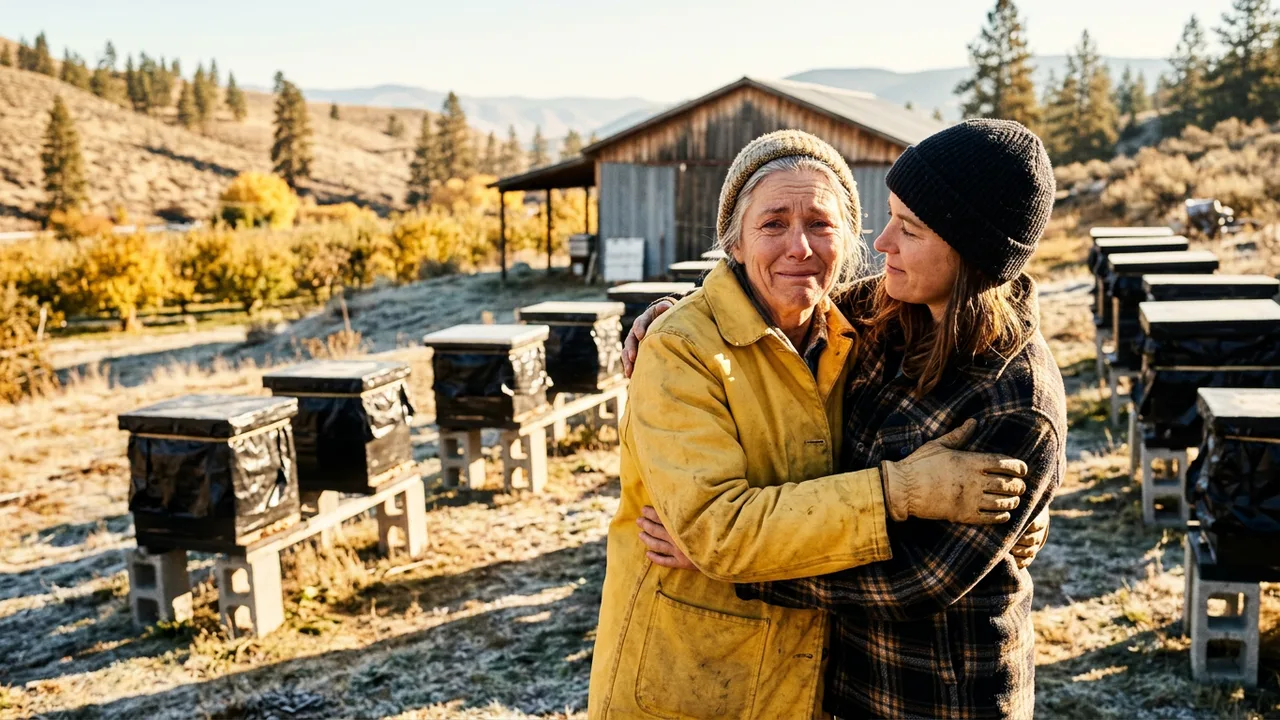
The letter from the Hensel orchard's new owners ran three lines, and by the third I knew my 160 hives had no work come April, and no work meant no money to winter them.
They were going with a big commercial outfit out of California. They thanked me for my years of service. Twenty-two Aprils my girls had worked those Monitor rows, and the orchard had been sold over the summer without anyone telling me.
I read it standing at the mailbox at the bottom of the gravel road. Then I walked back up to the honey house and counted the hive stands out loud, because counting is what I do.
Nearly two weeks later I drove the twelve miles to Wenatchee.
"Hensel dropped me," I said.
It was the first time I had said it where anyone but the bees could hear. Heidi Okerlund took off her reading glasses and let them hang on their cord.
"Here's what the committee needs," she said. "A signed spring contract by renewal on October 23. Without one, the line renews at six thousand."
"I owe eighteen."
"Then the balance has to come down by twelve thousand first." She typed something on her tablet and did not soften it, which I had always liked about her. "Marla, have you thought about scaling back?"
I looked at the pen cup on her desk and counted the pens. Seven. For twenty-six years Arne and I had built that yard, and a kind woman in a blazer was asking whether I had considered quitting.
"I've thought about a lot of things," I said. "Quitting isn't on the list."
---
On Saturday the twelfth I was chalking an X on each of sixty hive lids while my daughter's voice came out of the phone in my jacket pocket.
"One, you're fifty-eight," Abby said. "Two, you're up there alone. Three, you owe twelve thousand dollars you don't have. Sell all of them, Mom. Sell them and come to Spokane."
"I'm selling sixty."
"That's not enough to fix it."
"It's twelve thousand if they all sell at my price." I chalked another X. "Then I find the rest."
I poured coffee from my old dented green thermos, and my thumb found the letters scratched crooked into the paint. QUEENIE. There had been a boy at Valley Pride the winter of 2001 whose last name I had lost long ago. I drove him in every morning at 4:30 and put my name on him with Stan Wolcott when nobody else would. He cut those letters in with a pocketknife, and I let him.
"Mom? Are you there?"
"I'm here," I said, and went back to the chalk.
That night I posted the sixty in the North Central Washington Beekeepers group at two hundred dollars a hive. I wrote that the first of them were started in 2000, the winter I was still packing pears at Valley Pride, because I wanted it to sound like a plan and not a fire sale.
---
A young woman wrote me through the group eight days later, on a Sunday and asked to see the hives. I told her Thursday.
She came up the gravel in a small gray car, a clipboard under her arm and a pollination brokerage's logo on her jacket, a name I did not know. She said her name was Yolanda. She walked the whole yard with her hands behind her back, looking at hive bodies the way I do.
"How long have you kept bees here?" she asked.
"Since the year 2000."
"And you really packed pears at Valley Pride?"
"Winters, until it closed." I did not like how she watched me when I answered. "Who sent you?"
"Nobody. Who's your spring contract with?"
"Hensel dropped me for a California outfit," I said. "If that's who you work for, you can tell them they're welcome to what's left of me."
"I don't work for them."
She followed me into the honey house, where the woodstove was cold and the thermos sat on the coffee counter. She looked at it a long time, longer than a thermos deserves. Then she thanked me for my time and drove down the hill without an offer.
I stood there with my arms crossed, sure I had just been sized up by a scout, and told myself good riddance.
---
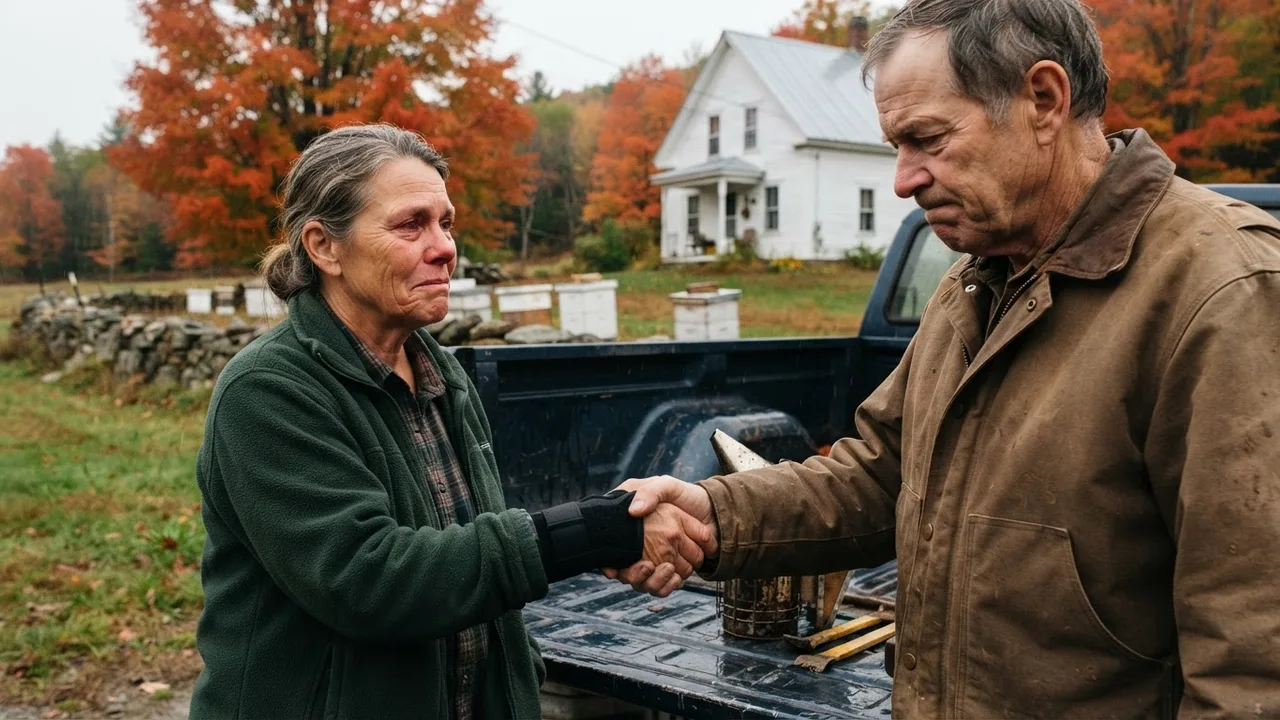
Dylan Mraz came the Tuesday after, with a borrowed flatbed trailer behind an old pickup and a bee suit so new it still held the creases from the package. He apologized before he named a number.
"I'm real sorry, ma'am. I only have nine thousand. That's a hundred fifty a hive. I borrowed it against my truck, and my wife's due in January."
I needed twelve. I looked at those package creases down the legs of the suit and did the arithmetic I had been avoiding for a month. Nobody else had made an offer.
"Take all sixty," I said.
"At a hundred fifty?"
"At your price. Don't make me say it twice."
Among the sixty stood the hives of the queen line Arne and I had bred for twenty years. I helped him strap every stack down with ratchet straps, and I pressed my palm against the last lid once before he cinched it. The trailer went down the gravel road toward Leavenworth, thirteen miles west, and I stood in the dust until the sound was gone.
Three thousand dollars I needed would come out of my winter feed savings. Arne's bees were gone.
---
Abby drove down from Spokane a week and a half later, on a Saturday, her keys already in her hand when she got out of the car. She walked the length of the yard, stopped at the sixty empty cinder-block stands, and folded her arms.
"Where are they?"
"Sold."
She looked at the stands, not at me.
"For how much?"
"A hundred fifty a hive."
"You asked two hundred." She counted something on her fingers. "Mom. Here's what I'll do. I'll pay the winter feed. You sell the other hundred and move into the back room by spring. The boys are asking for you."
"No."
I picked a dead bee off the nearest stand and flicked it into the grass.
"Why not?"
"Because they're mine, Abby."
"You always pick the bees." Her voice went clipped and small, the way it did when she was six. "That whole winter Dad walked me to the Lindens' in the dark so you could pull extra shifts."
I opened my mouth. I had no name to give her and no way to explain a boy I could not even call by his last name. So I said nothing, and she took the nothing for an answer.
When I came out Sunday morning, she was gone. Her car had pulled out before light, a day before she had planned to leave.
That Tuesday I drove to Wenatchee and paid Heidi twelve thousand dollars: Dylan's nine and three of my savings. It left me four hundred.
---
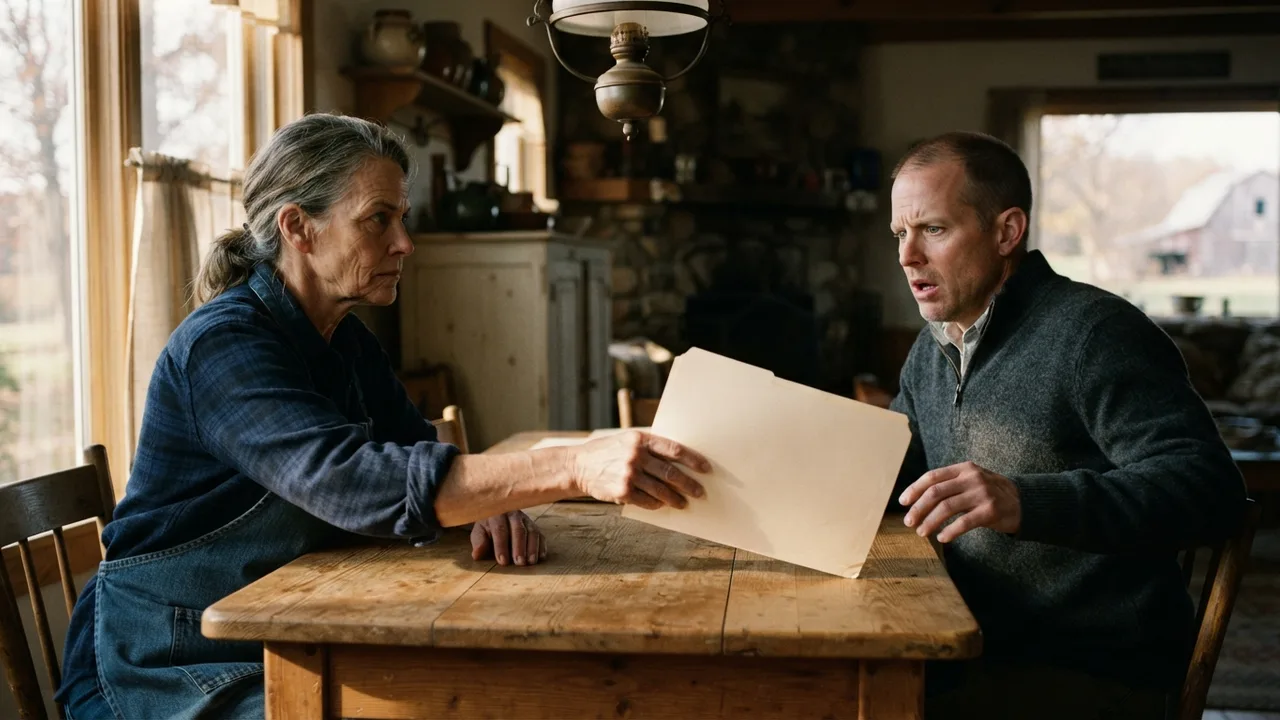
Yolanda came back on the next Tuesday, mid-morning, with the woodstove lit and a folder in her hands. I was at the coffee counter. I was stiff before she opened her mouth.
"The hives are sold," I said.
"I'm not here to buy." She set the folder down. "My name is Yolanda Garza. My father was Ramón Garza."
"I don't know any Ramón Garza."
She did not argue. She pointed at the thermos on the counter. "He called you Queenie. He said he scratched that in with his knife and you didn't get mad. You said now you'd never lose it."
I picked it up and turned it over in my hands. The heater in my old Ford had rattled. Headlights had swept the dark road to Monitor at 4:30. A boy in the passenger seat had sung along badly to the radio, and Stan Wolcott had said to me in the break room, *He's on you, Marla.*
"He had a baby," I said slowly.
"That was me." She did not smile. "He died in March. A heart attack, at forty-four. He always meant to drive up and find you. He wasn't a saint, Mrs. Ekstrom. He drank for years. But he kept that job and he kept me. I was the baby."
I set the thermos down very carefully.
"I found you in the beekeepers group," she said. "Your post said Valley Pride and Cashmere and Marla. My mother said that's the name."
"And you came up here pretending to be a buyer."
"I wanted to see you first." She opened the folder. "A cherry grower in Malaga named Barela needs a hundred hives in April. Ninety-five a hive."
My face closed. I felt it do it.
"I won't take a thank-you dressed up as a contract."
"Mr. Barela doesn't know my dad," Yolanda said, getting more formal as she went. "He needs bees in April. I told him you're good and that I'd stand behind you. That's all you did for him."
I put my hand on the folder and did not open it.
"I'm not signing alone," I said. "I want my daughter here."
---
I called Abby on Wednesday. She snatched up the phone before I heard it ring on my end and said, "Is it the bees?"
"Come Friday. Ten o'clock. Heidi's coming for the renewal."
"Mom, I can't just—"
"There's something I never told you," I said. "Come."
She was quiet. Then she said, "Okay."
---
By ten on Friday I had wrapped nineteen hives in black. Heidi Okerlund climbed out of her car in her muddy flats and counted along the rows with her tablet against her chest.
"One hundred," she said. "And spring?"
Abby stood by the barn, keys in her hand, arms folded. Yolanda stood a little way off with her clipboard. I took off my gloves.
"Before I answer, Abby, you're going to hear something." I made myself look at her. "That winter wasn't extra shifts. There was a boy nobody in Monitor would hire. He had a baby and a record. I told Stan Wolcott to put him on my word, and his job was my job, and he had no car. So I drove him in every morning, and your father walked you next door in the dark because I asked him to. He was angry with me. He was right to be."
Nobody said a thing. The woodstove ticked behind us.
"I should have told you," I said. "I let you think the worst."
"I was the baby he was getting up for," Yolanda said quietly.
Abby looked at her, then at me. She stayed quiet a long while.
"I've told Pete for ten years you picked a paycheck over me," she said. "I'm going to have to tell him I was wrong." She put her keys in her pocket, the first time I had seen them go in. "I'll take the bed out of the back room."
"Abby."
"When's bloom?"
"Mid-April, give or take."
She kicked a clod of frozen dirt off her boot and looked up the rows.
"I'll take the days off. I'll help you move them."
I signed the contract on the coffee counter and handed it to Heidi. She read it through, typed on her tablet, and read it again.
"With this I can renew the line at the full eighteen," she said. She did it there, with her thumb, while we watched.
Yolanda set an envelope on the counter. "Two thousand. For winter feed."
I slid it back to her. "You put your name on me. That's the part I'll take."
She stood a moment, then picked up the envelope.
Abby went out, lifted the roll of black wrap, and started on the next hive.
---
When Heidi's car had gone down the hill, I poured coffee from the thermos into two cups and handed one to Yolanda, and one to Abby when she came to the door. I wished I could tell Ramón he had done fine.
Then I carried the thermos out to the yard and set it on one of the sixty empty cinder-block stands, where the frost had not burned off the north row. I stood beside it and counted the hives wrapped in black, out loud: one hundred, where in August there had been one hundred and sixty.
Comments