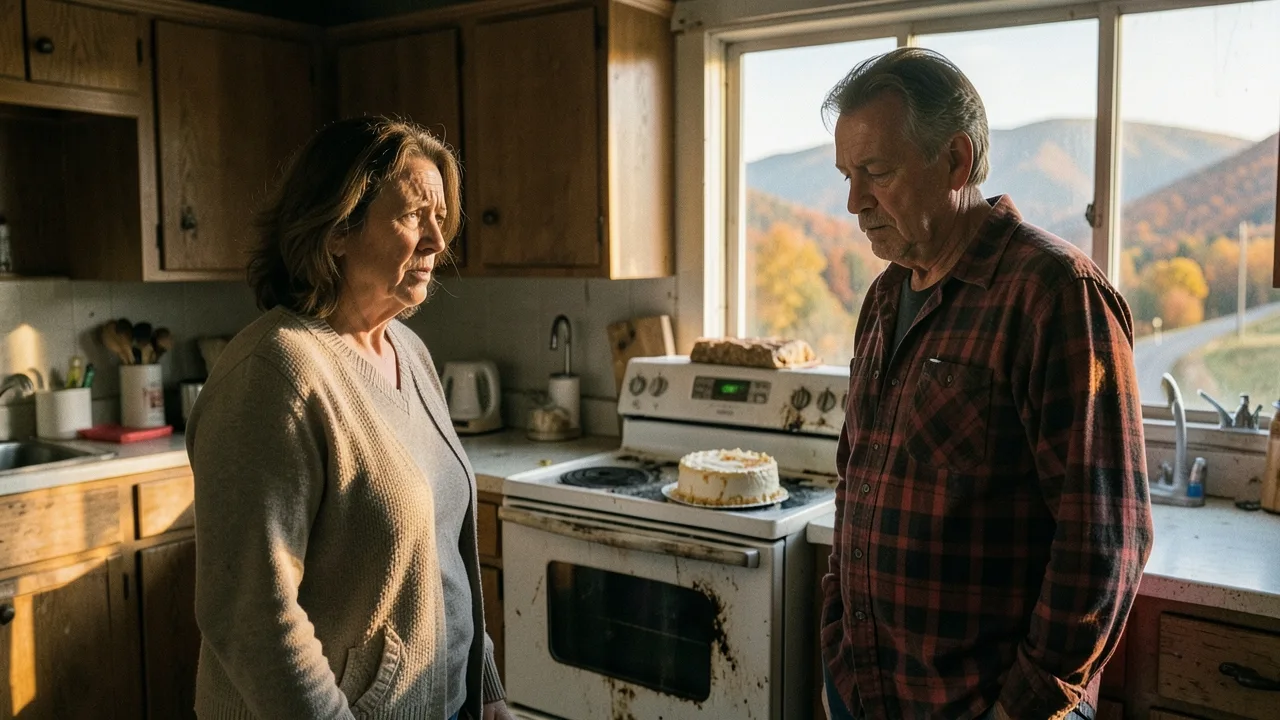
My brother had the listing papers for Mama's house in his truck, and he meant for her to sign them over her own birthday cake, three weeks after the fire. The price typed on page one was $139,000. If she signed, Mama lost the house she had kept since 1971, and I lost the only home I had left by December 15.
I didn't know about the papers yet on the morning of the fire. I was at the high school cafeteria in Ava with two hundred biscuits' worth of gravy on the stove and my phone in my locker, where it stays during breakfast service. Mama's range is a 1980s electric, older than my marriage was. At 6:40 she turned it on for her own biscuits, the way she had every morning for fifty years, and smoke came off the oven floor and then flame.
She shut the door and waited it out. Then she called me, and I didn't answer. Then she called Garland.
I saw his text on my 9:30 break and drove the four miles home. Garland's truck was in the yard. He stood by the stove, the range breaker switched off, the oven black inside, Mama in her chair with her glasses on their beaded chain.
"Here's the thing, Nevie," he said. "She let grease build up. She can't see it anymore."
"I can see fine," Mama said, and then she said, "I'm sorry," twice.
I looked at my brother, who has decided things since I was six. "All right, Garland," I said.
That Saturday, October 3, he took her to Springfield to tour Cedar Hollow Senior Living, ten minutes from his house, and she came home having said yes. He paid a $2,500 deposit that couldn't be refunded, for a room open November 1. At the door he said, "Until then she isn't alone. Not one day."
I'm gone ten hours a day. So I took two unpaid days, Monday and Tuesday, and sat at her kitchen table while she did crossword puzzles in pen and didn't look at the stove. It cost me $296, which was the money I'd set aside for the electric bill. I put the bill under a magnet and said nothing.
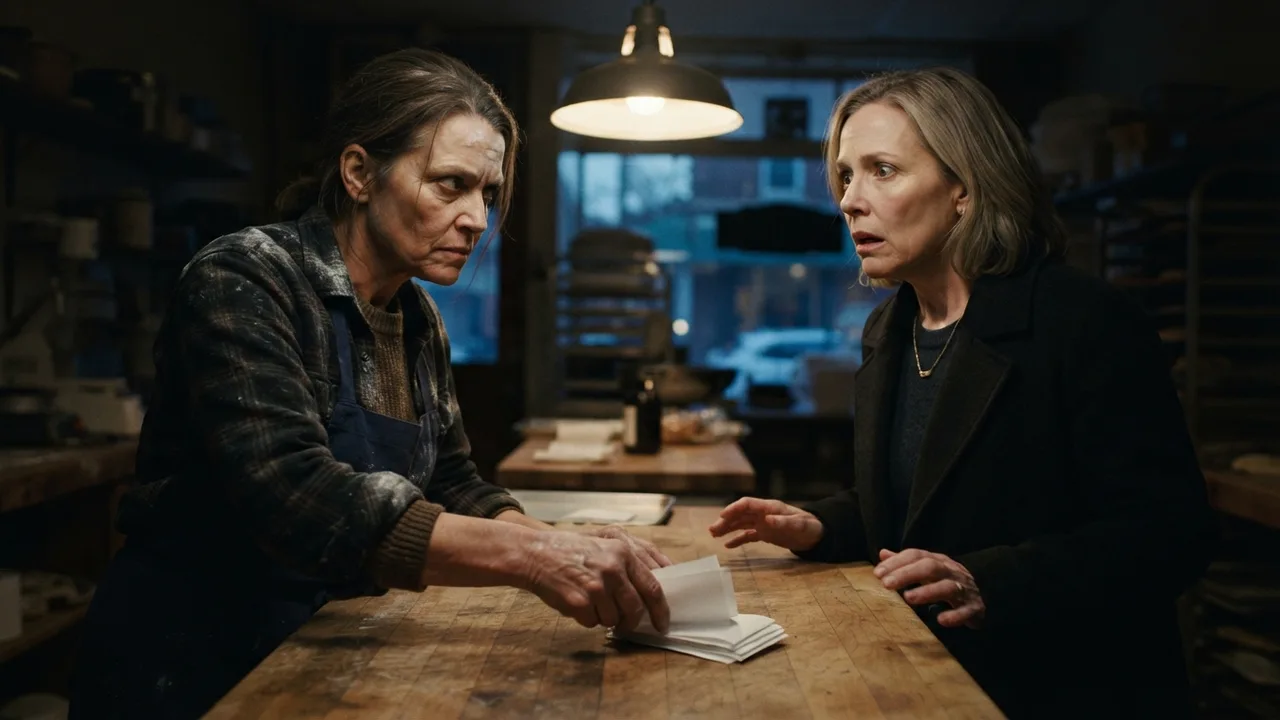
On Thursday a real estate agent in a gray blazer walked through the house with Garland, tapping the doorframes. She said $139,000 and that buyers like a house empty. She drew up a listing agreement for Mama to sign at her birthday dinner.
Garland followed me out to the porch, where the light he'd fixed was burning in the daytime.
"You'll want a place of your own by December 15," he said. "I've looked into it. It's only fair to give you time."
That night I paid $40 to apply for a duplex across town. I lay awake with a pencil and the back of a Walmart receipt and did sums that would not come out, and I did them again the next night.
Saturday, Garland and Lacey drove down for the day. Lacey came in carrying a casserole dish, the way she always does, calling me "hon" and filling the kitchen with talk. Garland stood at the counter with his reading glasses pushed up on his head.
"I'm not trying to blame anybody," he said. "But if you'd picked up your phone, Mama would still have her house."
Lacey stopped talking. The refrigerator hummed.
"Garland, that's not—" I said.
"He's right, Nevie," Mama said. She wasn't looking at me. She was folding a dish towel into smaller and smaller squares. "I'd have been all right if you'd just answered."
I took the keys and sat in my car at the end of the hill road with the engine off and cried until my nose ran, with my cardigan sleeve in my teeth so nobody in the yard would hear. Then I wiped my face and went back in and set the table for supper.
That night I scrubbed out the oven so no buyer would see my mother's kitchen filthy. The breaker was off, so it was only elbow work, with a putty knife and a bucket and Dawn. The soot came up in sheets. Under it, on the floor of the oven, was a ring of hard amber beads, ten inches across.
I scraped at them and they wouldn't come. I held one up to the light, and it was clear as varnish, glassy, not soft and gray like grease. Thirty years of cleaning ovens for a living, and I had never seen grease do that. I photographed the ring four times with my phone and went to bed with the putty knife still in my hand.
Sunday I was looking for baking soda in the pantry, behind the Crisco and the cornmeal, when I found a bottle I'd never bought. Flaxseed oil, nearly full, the label still crisp. Nobody in that house would buy it. I season my own iron with Crisco, because flaxseed flakes, and Mama has only ever wiped her skillet with Crisco on a burner.
I carried the bottle to the living room. "Mama, who's been in the kitchen?"
"Nobody but us." She frowned. "Garland, the Saturday before. He fixed the porch light. Cleaned up my skillet while I napped."
"Cleaned it how?"
"I found it back on the stove. I figured he scrubbed it." She touched her glasses. "I didn't think to look."
I put the bottle in my purse. I didn't say anything else, because I had only half of what I needed.
Wednesday, after my shift, I drove the sixty miles to Springfield with the photographs in my purse. Garland's garage door was half up and his truck sat inside, clean as a showroom. He was at the workbench, sorting bolts by size into a muffin tin.
"Nevie? Is Mama all right?"
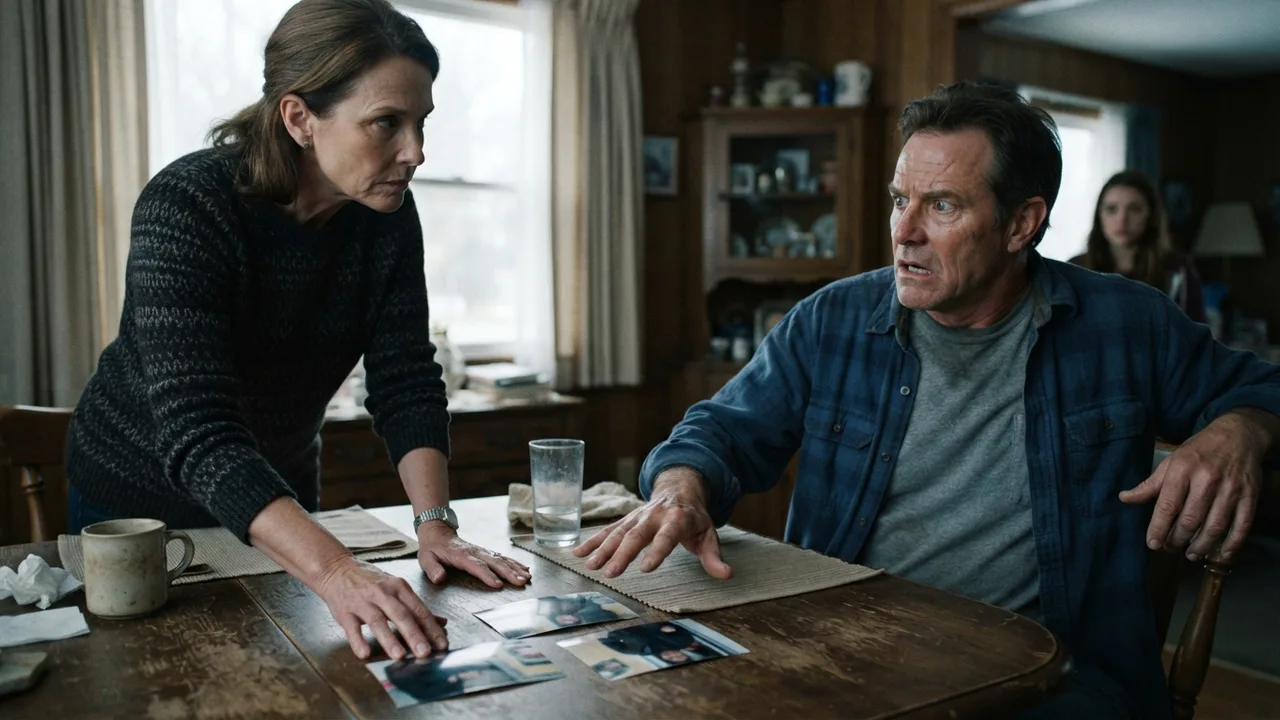
I laid my phone on the bench with the first photograph up, then the second. He looked at them with his glasses pulled down.
"That ring is a perfect circle," I said. "Mama says you were alone in her kitchen the Saturday before the fire. I want to know what you did."
"I fixed the porch light." He kept sorting. "And I scrubbed her skillet. That's all."
"That ring didn't come from a scrubbed skillet."
"It's old grease. It's what I told you. It built up over years."
"I've cleaned ovens for thirty years, Garland. Grease doesn't set like glass."
He took his glasses off and rubbed his eyes. "You drove all the way up here after a shift to tell me what you think you know about grease."
I took the bottle out of my purse and set it on the bench beside the muffin tin. I didn't say a word.
He looked at it a long moment. His jaw moved.
"That was a teaspoon, Nevie," he said. "I had it upside down on the top rack at five hundred, like the video said, and I wiped it thin."
Then he stopped. I watched him hear himself.
I hadn't said oven, and I hadn't said upside down. I hadn't said five hundred.
"Oil runs off the rim of a pan baked upside down," I said. "That ring is the rim of Mama's skillet. Grandma's skillet. It's been in that kitchen since before either of us, and she never once put it in an oven."
"It was off when I left. I checked."
"Mama has believed since that morning that her own mind is going. She apologizes to me for biscuits. And I have been called careless in front of your wife in Mama's own kitchen."
His face went red above the polo collar. "She still turned that oven on without looking. And she's still alone ten hours a day, and your phone is still in a locker. Cedar Hollow doesn't change one thing about that, it fixes it."
"That's not what I came about." I kept my hand on the strap of my purse.
"Listen." He lowered his voice, the manager's voice, steady and reasonable. "She's agreed. It's a good place, Nevie. She'll be ten minutes from me. Don't tell her. Let her think it was the grease. It's easier on her."
"It's easier on you."
He dropped a bolt into the wrong cup of the muffin tin and left it there.
"You want to be right more than you want her safe," he said.
The garage smelled of motor oil and cold concrete. I picked up my phone and the bottle and put them in my purse.
"You have until the birthday to tell her yourself," I said.
I drove the sixty miles home in the dark, past the Casey's in Mansfield with its lights on, and I didn't say "All right, Garland" to anybody. The windshield was wet before I reached Ava, though it wasn't raining.
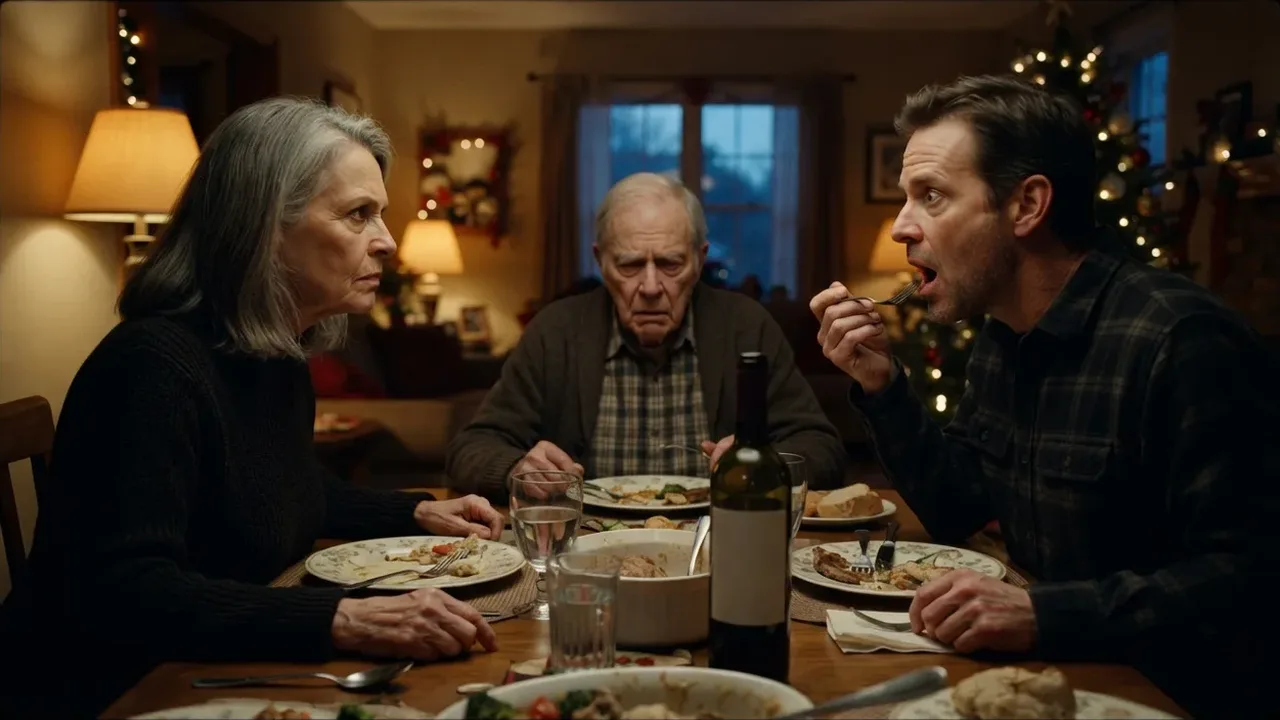
Saturday I cooked chicken and dumplings in the school kitchen, and Sunday I carried them home in two lidded pots, because the range breaker was still off. Lacey brought a bakery cake from Price Cutter with MAMA V in blue icing, and Mama wore her good cardigan, her white hair set Friday as always. We ate at the dining table. Garland said almost nothing, and Lacey filled the silences for both of them.
After the cake he reached into his jacket. He took out the listing agreement and a pen and slid them across the tablecloth to our mother.
"Just a formality, Mama," he said. "Sign on the line with the tab."
Mama picked up the pen. Her hand shook a little, and she thumbed the cap.
"Mama," I said. "Before you do. Come look at your oven."
"My oven's ruined."
"Come look at it anyway."
She stood slowly. The other two followed us into the kitchen, Garland last. I opened the oven door and pulled the rack out, and the ring sat on the floor in the porch light from the window, amber, bead after bead, glinting.
"That's ten inches across," I said. "It's the size of Grandma's skillet. You never put that skillet in an oven in your life, Mama, and you never let grease build up in this kitchen. All you did was turn on your oven for biscuits the way you have for fifty years."
Mama bent and looked. She straightened up and looked at me.
"What is it, then?"
I turned to my brother. "Tell her, Garland, or I will."
"It doesn't change that she was alone," he said. His voice cracked. "It doesn't change that."
"You could have asked Mama to come live near you," I said. "You didn't need it to be her fault."
"I'll keep my phone in my apron pocket from now on," I said, to her and to the room. "I'll call you at my 9:30 break every school day. And I'm going to ask the school about starting at six, so I'm not gone before you're up."
Nobody in the kitchen moved. Lacey had gone quiet and exact, her hands at her sides. "Garland," she said. "What's she talking about?"
He pulled out a dining chair and sat down at the table with his hand over his mouth. When he took it away he spoke to Mama, not to me.
"The Saturday I fixed your porch light," he said. "While you napped, I baked your skillet. Seasoned it. I used too much oil, a lot more than I thought, and it ran off onto the oven floor. I put it back on the stove and told you I'd cleaned it up." He swallowed. "I never once thought of it until Nevie put that bottle down in front of me."
Mama's hand went to her glasses chain. "Oh," she said, softly. "Oh, Garland."
"I wanted you close so bad after Daddy died." His eyes were wet. "When you called me that morning and not Neva, I was glad. God help me, I was glad. I let it be your fault because it was easier than looking at it."
Lacey pulled out the chair next to him and sat. "The deposit's ours to eat, Garland," she said. "Not hers."
"We won't ask Mama for a cent of it," Garland said. He rubbed his face. "Not a cent."
Mama stood where she was, her hand on the oven door. "I'm staying in my house," she said.
Garland took the listing agreement off the tablecloth and tore it in half. He laid the halves on the counter beside the sink. "The house stays," he said.
"Nevie," Mama said, and her old feed-store voice was back, quick and tart. "You tell that duplex man you won't be needing it."
"I will, Mama."
I looked at her. "I'm sorry you thought it was you. I should have looked at that oven the first night."
"You weren't here to look," she said. "I didn't know that was a thing to forgive."
Garland pushed his chair back. At the door he stopped with his jacket in his hand.
"You could've let me be wrong in private," he said.
"I gave you four days," I said.
He nodded once. He and Lacey were out of the house before eight. Lacey squeezed my arm without saying anything. Mama cut a slice of the cake and wrapped it in foil and set it on the counter for him, on top of the torn papers, and Garland walked past it to his truck without turning his head. The taillights went down the hill road and out of sight.
That night I waited for the phone. Garland has called every Sunday of my adult life when he gets home, to say he got in safe, and I sat in the kitchen with the phone face up on the table until the dishes were done. It didn't ring.
Mama came in around ten in her robe. She went down the hall to the panel box and I heard the breaker snap, and the range clicked and hummed, the old element glowing orange under the burner coil.
"Well," she said. "I've got no biscuits for tomorrow."
"It's ten o'clock, Mama."
"Flour's in the same place it's always been."
I got out the buttermilk and the Crisco. She cut the shortening in with two knives, the way she always has. I turned the oven dial to 425 and it began to tick as it climbed.
The two torn halves of the listing papers lay on the counter under the slice of birthday cake in its foil, and I left them there.
Comments