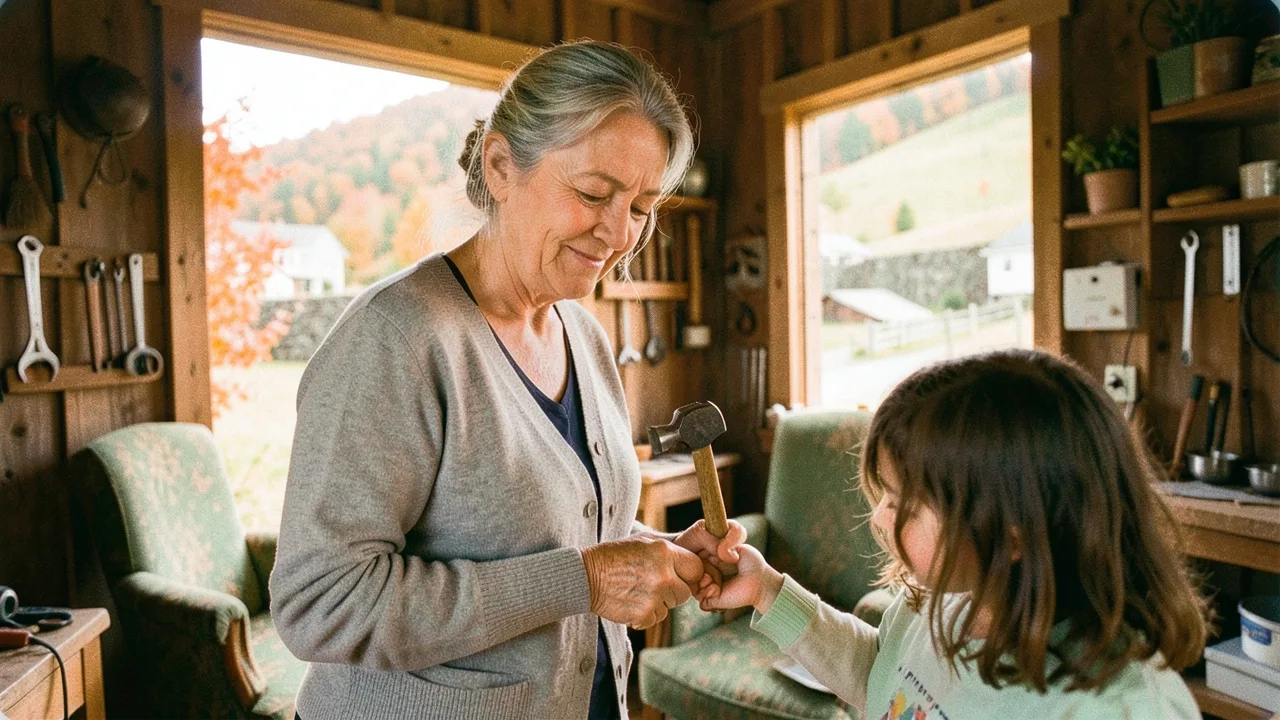
My daughter was marrying into the Lindells in October, and at our first dinner in their parlor I nearly lost her by reaching for a chair I had last touched with my tack hammer in 2001.
Phoebe Lindell had put me at the kitchen end of the table. Callie sat across from her fiancé with her arms folded, which is what she does when she wants a night to go well and fears it won't.
I had known the chair from the doorway. It stood by the fireplace, a wing chair in faded green damask, the left wing leaning a hair out of true, the front knees ones I could have drawn blind.
Nobody in that room knew that before I was Colette from the cushion shop on Mill Brook Road, I was C. A. Wrenn. I ran the upholstery conservation lab at the Merriwick Museum of American Decorative Arts in Massachusetts. I wrote *The Seat Beneath*, the book every conservation student still opens first.
In 2001 that chair came through my lab for a show called Seated in the Republic. I kept its 1794 webbing and horsehair, splinted the cracked rear rail, and inked a label on the linen under the bottom cloth. I signed it.
When Callie took up chairmaking at fifteen, I saw that one phone call with my old name would open every gallery and jury in New England. I wanted her Windsor chairs judged as hers. So she grew up believing I had "done the cushions" at some museum, and I let her.
Phoebe carried in a roast chicken on a platter older than I was. She was slim and straight-backed, with silver hair in a bob and pearl studs, and she smoothed her skirt before she sat.
"Colette, I'm so glad you could come," she said. "The sign out your way always makes me smile."
"It's accurate," I said. "That's the best I can say for it."
Ezra laughed. Callie laughed a beat later, too loud.
After the pie, while the others stacked plates, I crossed the parlor. I told myself I only wanted to look. I laid my thumb on the chair's front rail, where the old tack line ran under the cover, and felt the work I had done through twenty-five years of dust.
"Please don't." Phoebe stood in the kitchen doorway with a dish towel. "It's been in a museum. Callie tells me you do recliners? And boat cushions, from your sign."
"And pew pads," I said. "I don't like to leave them out."
Ezra laughed along. Then, because he is a kind man trying to mend things, he pushed up his glasses and told a story. His grandmother Verity had lent that chair to a museum once, he said, and it came back fixed up by their lab, good as new.
Not as new, I thought. Better than new. I had a mouth full of words, and Callie's face shut it.
In the car she watched the common go by. It was three miles to my house, three minutes, and I counted mailboxes.
"Mom, could you just not touch their things?"
"I wasn't going to hurt it."
"It's not about hurting it." She laughed, the covering kind. "Phoebe's been so nice to me. I need it calm. That's all."
I pulled into my gravel drive. For the first time in her life my daughter had been embarrassed of me, and she knew I could tell.
Six weeks went by. On the fourth Saturday in August I sat in the Lindell parlor with a cup of Phoebe's Earl Grey and a folder of fabric samples I had carried over in my purse.
"I'd like to re-cover your twelve parlor chairs," I said. "As my wedding gift. I'd do the work at cost on the fabric and nothing on the labor."
Phoebe set down her cup. "That's generous. We'll keep it in professional hands."
"I am a professional."
"Of course." She smiled. "I'm sure you understand."
Then she brought out a folder of her own from a decorator in Manchester. It held a sketch of the wing chair with arrows. Strip to the bare frame. Foam. Staples. New damask, with Callie and Ezra to choose the swatch at the rehearsal dinner.
"A surprise," Phoebe said. "Verity's chair, handed down properly. It's gone soft, you know. Sags."
"It sags because it's the original horsehair," I said. "The work under that cover should not come out."
"Surely it can be redone?"
"It's 1794. You can't put it back."
She straightened her cup on its saucer. "I think I'll trust a professional over a cushion shop. And not a word to Callie. I want her face."
I had one sentence ready, my own name, and I could see how Phoebe would hear it. A woman with a sign and a grudge, reaching for credit. If it came out that way, Callie would hear it that way too.
I thanked her for the tea. I drove home and tore out a boat cushion seam I had sewn perfectly well.
The first Saturday of October Callie came to the shop with sawdust in her braid and a pencil behind her ear. I was at the machine, finishing a pew pad for the Congregational church in Hartland, forty-two inches of red corduroy. She stood among my recliner frames and looked at the floor.
"Phoebe wants the toasts kept to family," she said. "So could you drop yours?"
"I wrote four pages. It runs three minutes."
"I know. I'm sorry."
"What else?"
She picked at a thread on her cuff. "She wondered if you might wear something that isn't, you know. The shop."
"I have one dress," I said. "It's navy. I wore it to your high school graduation."
"It's a good dress, Mom." She laughed. "I paid the guild jury fee again, did I tell you? Third year. Maybe it's the charm."
I stopped the machine. Her laugh had a seam in it that I knew, because I had sewn a hundred like it. She had been explaining me to the Lindells since July. Every time she said *Mom does the cushions*, she had to swallow something to say it.
"You don't have to smooth me over," I said.
"I'm not." She still hadn't looked at me. "I just want it calm."
When her truck had gone I sat with the red corduroy in my lap. Staying quiet had stopped being a cost to me alone. My daughter was carrying my smallness for me, and she was twenty-six.
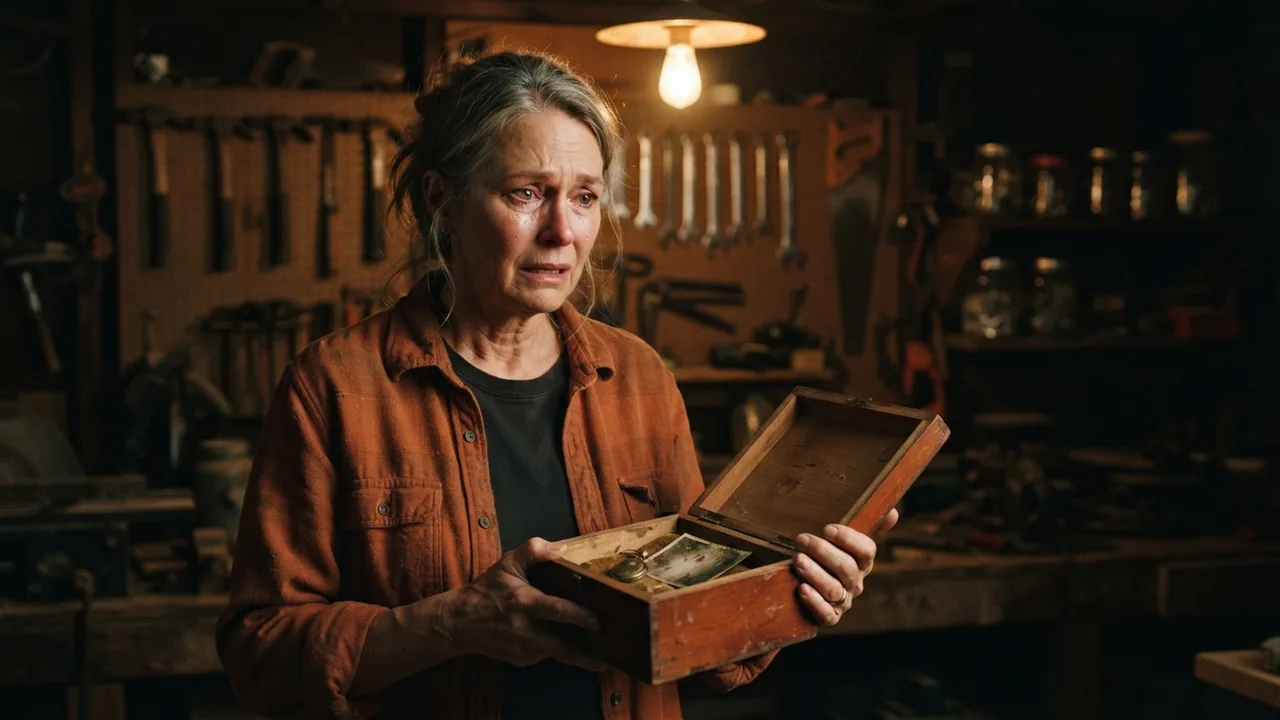
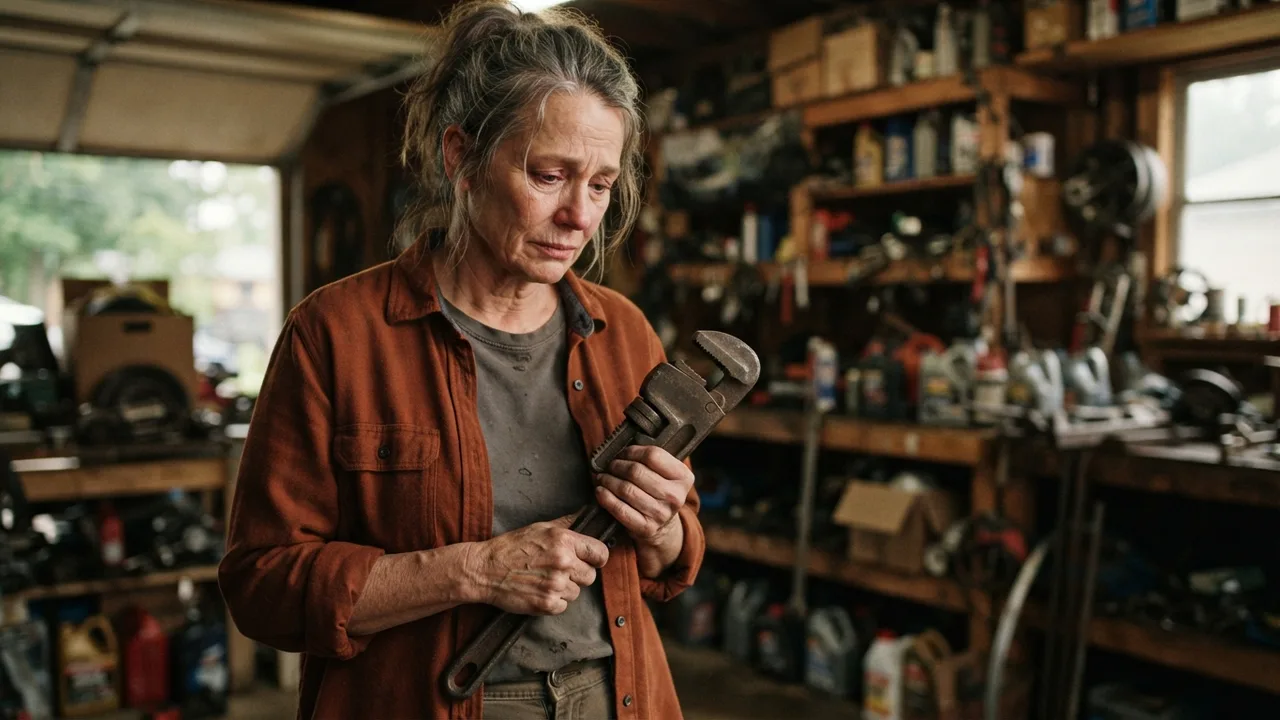
On the Thursday before the wedding I locked the shop door and opened the drawer under the tack tray. The hammer lay where it had lain for years, the claw split on one side from a stubborn nail in a Boston highboy. The Merriwick lab had given it to me in 2001. My initials, C.A.W., were cut into the steel.
I thought about what I would lose. Twenty years of being only Colette, a name nobody had ever needed to be careful with. And Callie's certainty that nobody had ever helped her, the one thing I had kept quiet to protect.
Then I thought of her laughing at the table, and of Phoebe's plan, and the staples.
I put the hammer in my purse beside my reading glasses and went to press the navy dress.
Friday night, after the roast and the apple crisp, the wedding party filled the Lindell parlor, perched on folding chairs and the sofa arms. Ezra's godfather stood by the window with a glass of cider. Phoebe stood beside the wing chair with a swatch card in one hand.
"This was Verity's," she said. "It came to me, and now it goes to the next bride. After the wedding it will be restored, stripped to the frame and re-covered, and you two will choose the damask."
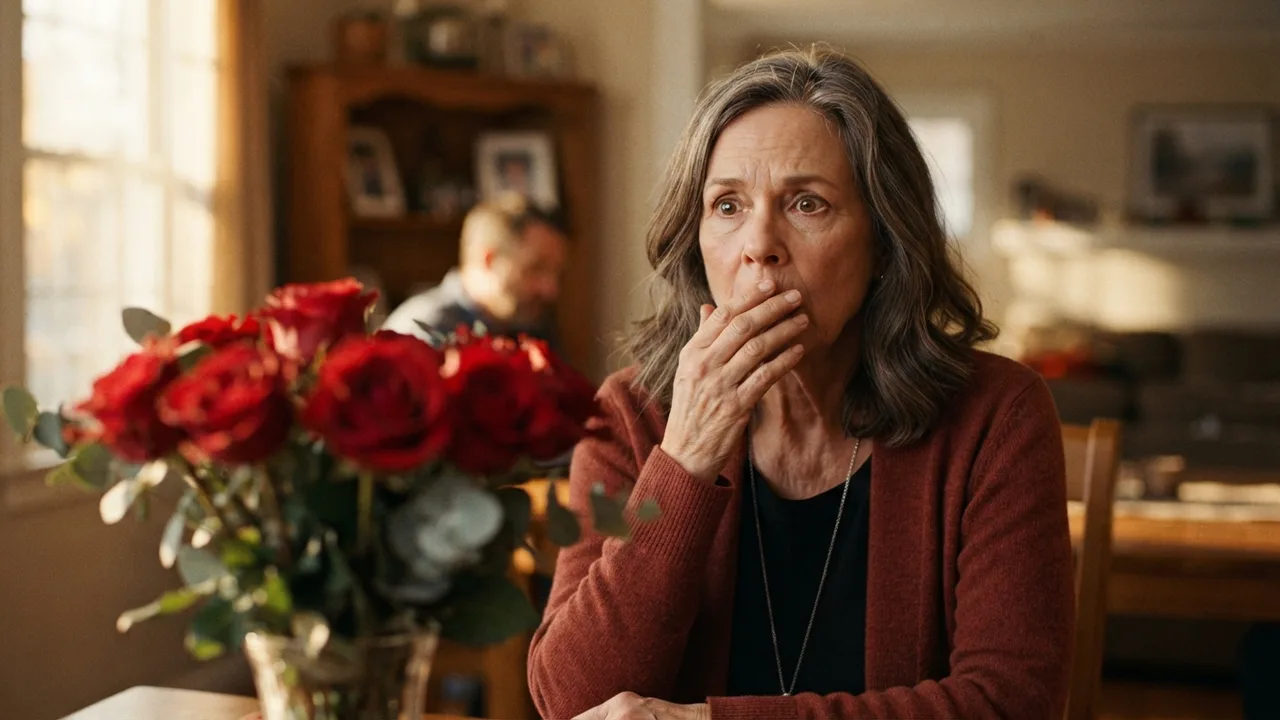
Callie put a hand to her mouth. Ezra's mouth fell open in the nicest way.
"Oh, Phoebe," Callie said. "That's too much."
"It's not enough." Phoebe held out the card. Four blues, a gold, a rose. "Go on."
"May I have one minute?" I said.
Every face turned. Phoebe's smile stayed, but it thinned.
I took the hammer out of my purse and knelt on the Persian rug. The room made a sound, a shifting of folding chairs. I tipped the chair onto its back legs and set my knee against the seat rail. With the split claw I lifted three tacks at the rear corner of the bottom cloth, counting them, and folded the cloth back.
The linen underneath was gray and soft. The ink had held.
"*Conserved, Merriwick Museum, 2001,*" I read. "*Original 1794 webbing, horsehair and linen retained. Rear rail splinted; do not strip the frame. Signed, C. A. Wrenn.*" I looked up. "I wrote that. Wrenn was my name before Ferraro. I ran that lab for six years, and I wrote the book they still teach from."
Nobody spoke. Callie stood very still.
Phoebe's hand went down the front of her skirt, and then down it again.
"Well," she said. "That's a surprise for everyone." She turned to Callie, not to me. "The chair is mine to give, dear, and I'm giving it. The contract is signed and the deposit is paid. The work gets done the week after the wedding, exactly as booked. If you'd rather have it left the way your mother likes it, then it stays here in my parlor and you can have the silver instead."
She held out the pen and the swatch card. She had put my daughter in the middle of two mothers.
Callie did not take either. Her face had gone white to the freckles.
"Three times I paid that jury fee, Mom," she said. "You let me think you sewed cushions."
I did not argue. She was right on every word.
"I did," I said. "I'll tell you everything. But first let me show you the chair."
I put my thumb on the back rail, the cracked one, and pressed. The wood gave under it with a soft grudging movement, and everyone in that room saw it.
"This rail split before it ever reached my lab," I said. "My splint is holding it together, and the old webbing is holding the splint. Strip to the frame, put in foam and staples, and the first staple gun will crack it. It will split within weeks. Your decorator is good. He won't know it's there."
Phoebe said nothing.
"Here's what I'll do instead," I said. "Your damask goes over a new linen layer, tacked into my 2001 strips and not into the frame. It comes off any day you like and nothing is lost. Callie does the work in her own shop, under her own name."
I laid the hammer on the rug.
"You can put your mark on it, Phoebe. You just can't take hers off."
Phoebe looked at the label for a long moment. She did not look at me.
"All my married life I've been the one who married in," she said. Her voice had come down to the size of the room. "Now I'm the one who nearly broke Verity's chair, and this whole room watched me not know it."
She did not say she was sorry, and I did not need her to. She laid the swatch card on the arm of the chair.
"Callie, pick the damask for the top."
Callie took the card. Her hand shook, and she still would not look at me.
The next afternoon the side yard of the Lindell House smelled of cut grass and cider, the maples on the common gone to orange behind the white tent. I stood at the guest table in my navy dress, looking for my card among the far ones by the hedge.
"It isn't there," Phoebe said behind me.
She wore a gray dress and the pearl studs. She held my place card by its corner, and it said *Colette Ferraro*.
"I moved it," she said. "You'll sit by me. At the family table."
"You didn't have to."
"No." She turned the card over in her hand and gave it to me. "And after the cake, Colette, would you say a few words? Keep it under three minutes. I'd like to hear what you wrote."
"It's under four pages."
"I'll be patient."
I said the toast in the end. It took two minutes and fifty seconds, and I did not look at anyone but Callie.
On Monday Phoebe telephoned the shop before I had the door unlocked and told me to come to the house and bring my strips.
She sat at the secretary desk in the parlor with the decorator's folder open and the cordless phone beside it. The wing chair stood where I had left it, the bottom cloth tacked back down.
"Stay," she said. "I'd rather not do this alone."
She dialed and put it on speaker. A man answered with the name of his shop.
"Mr. Pryce, it's Phoebe Lindell. About the wing chair. I'm cancelling."
"Mrs. Lindell." Paper rustled at his end. "The six hundred is nonrefundable under the contract, for my scheduling and sourcing."
"I understand."
"May I ask what's changed? If it's the blue, we can—"
"The rail is cracked, Mr. Pryce. The webbing is original. I'm told a staple gun would finish the job."
He cleared his throat. "I'd have seen that when I stripped it."
"Would you?"
Nothing came back for a moment. Then he said, "Send me a note and I'll refund the remaining eighteen hundred of the twenty-four hundred deposit."
She pressed the button and sat looking at the folder. Her thumbnail worked at the edge of the sketch with its arrows.
"Six hundred dollars," she said. "For a surprise. Ezra's father will ask where it went, and I will have to tell him."
"I'm sorry it cost you."
"Don't be kind about it. I'm not ready." She shut the folder. "Callie hasn't said a word to me since Friday. Not one, other than thank you."
"She hasn't said much to me either."
"No. She wouldn't." Phoebe stood and put her hand on the chair's left wing, the one that leaned. "Saturday I'll take it up to her shop. You'll be there."
"I will."
"Good. I'll need somebody to tell me what I'm looking at."
The next Saturday Phoebe drove the wing chair up Tenney Hill Road in her husband's pickup, wrapped in a moving blanket. She had a bolt of blue damask across the passenger seat. Callie's barn shop sits five miles from the common and seven minutes from my front door, and I had come over early with a box of linen and my strips.
Callie had cleared her bench. She had hugged me at the wedding and said all the right words, and then she had gone off with Ezra, and I had sat at the family table with a lump in my throat and a cup of coffee.
Phoebe dragged the chair down from the truck bed herself, took an upturned bucket and sat on it, neat as a church pew. "Show me how the top cover goes on."
"First thing," I said. "A dealer in Boston called my shop this week, asking for C. A. Wrenn."
Callie looked up from the linen. "Of course they did."
"I haven't called back." I picked a tack off the bench and rolled it between my fingers.
"You should." She wiped her hands on her flannel. "I'll always wonder, you know. Whenever a door opens for my chairs, I'll wonder whether it opened for your name. That's what you were trying to spare me, wasn't it? You decided that for me."
"I did."
"I'm still mad." She turned the pencil in her braid. "Show me the tack pattern."
So I did. I showed her the strip I had laid in 2001, the rows I had set an inch and a half apart so no two tacks shared a grain line, and the new linen we cut to sit over them. Phoebe watched from the bucket with her chin in her hand. When we had the linen pinned, she took a pen from her vest.
On the old label's blank corner she wrote in a steady bank manager's hand: *Top cover, 2026, for Callie and Ezra. P. Lindell.*
Half of West Alder had called the shop by then to hear it from me. I was not only Colette from the cushion shop anymore, and I missed it already, a little, the way you miss a coat that fit.
I picked up the hammer and put it in my daughter's hand. She weighed it, the split claw, the letters cut in the steel.
She set the first tack of Phoebe's damask against my 2001 strip, not the frame, and drove it home.
Comments