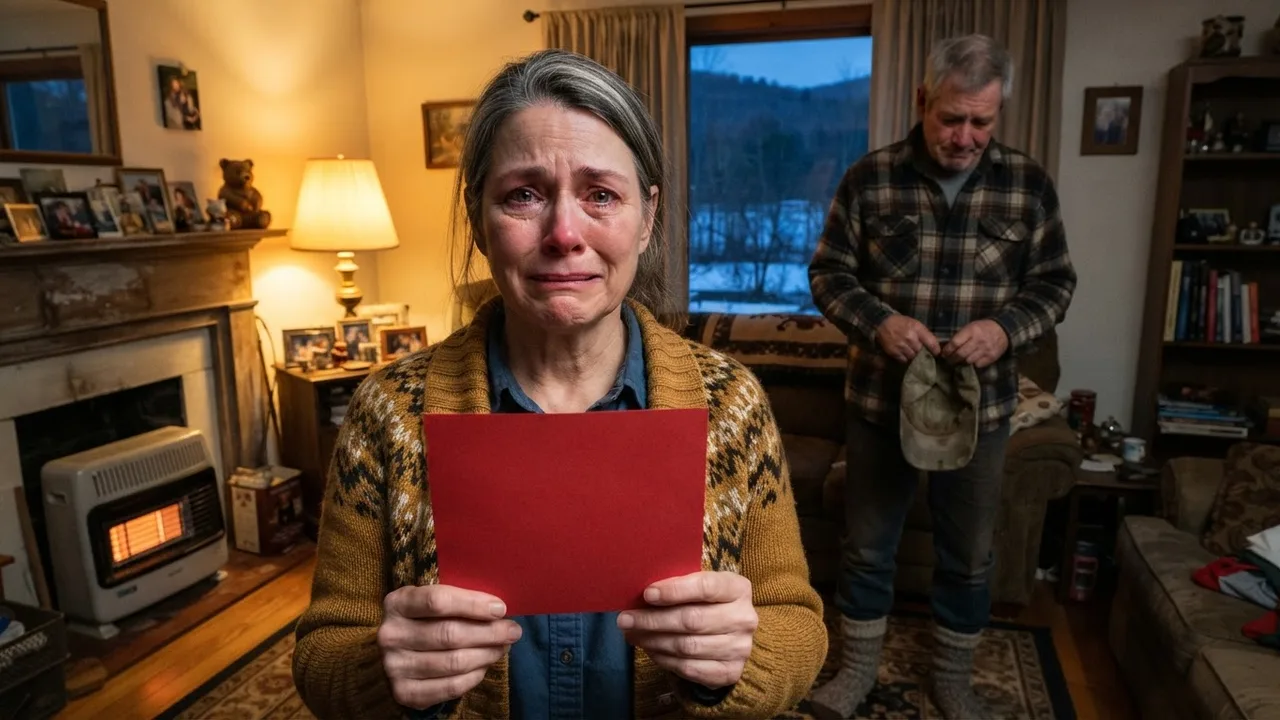
The furnace quit on the sixth of November, and that was the morning I found out eleven thousand dollars of our savings was somewhere my husband wouldn't show me. We had put away fourteen thousand six hundred dollars over twenty years, and the screen on the spare room computer said thirty-six hundred.
I had gone to that computer in my coat, just to see what a new furnace might cost us. Under the balance sat one line: official check, October 24, $11,000.
Boyd was at the coffeemaker in his Carhartt and wool socks, his feed-store cap hanging off one knee. I stood in the kitchen doorway and said it plain. "Where is eleven thousand dollars, Boyd?"
"CD," he said. "Laurel Valley Federal, in Mansfield. Twelve months. I stopped on my way to the VA."
"You never mentioned it."
"Meant to." He poured his coffee. "Breaking it early costs a penalty, Mar. Space heaters will do us until January."
Through the window I could see his truck in the drive, the sidewalls of the tires still black and shining. I said so. He said the old ones were bald, and they had been; I had told him so myself in September.
I did payroll for the Carrick Area School District for thirty years, and I still keep our books in a green ledger in the sideboard. I knew what a missing eleven thousand looked like. I also knew Boyd had never lied to me that I could find, in forty-one years, so I let the coffee go cold in my hands and believed him.
That night I lay in my vest and a wool hat under two extra blankets. It was nearly four before I slept.
The furnace man came that Monday. He said six thousand four hundred dollars, a January 6 install at the earliest, and a two-thousand-dollar deposit by December 15 to hold the slot. We drove to the Walmart on Route 15 and bought two heaters at thirty-nine ninety-seven apiece. I wrote the receipt in the ledger.
What I did not say to Boyd was that the money was not the only thing in that ledger. The year Kip's shop failed, taking twenty thousand of our dollars with it, Boyd sat across from me at the kitchen table and said not another dollar, not ever. I gave him my word. In October, Kip called me frightened, saying he was behind on his house, and I cut him off before he could name a sum. "I promised your father," I told him, and hung up, and went into the pantry and stood among the canned tomatoes until I could breathe. Boyd had the television on low in the front room. He never came in.
On the nineteenth I called Shelby from the car outside the Sheetz in town, because I could not say it in the house.
"I can't host Christmas," I said. "Not in a place where I wear a vest to the table. Thirty years, and I can't."
"Okay, so," Shelby said, and I heard her keys jingle. "I'll take Christmas Eve. My husband can do the ham. What happened to the furnace?"
"Eleven thousand of our savings is in a CD your father opened. He says it's safe. There's a penalty to break it."
"Then it's safe, Mom. I'm sure Dad knows what he's doing." She softened it with a little laugh that I did not care for. "You've worried about money since you started doing payroll."
I said thank you for taking the table. I sat there with the engine off, a woman of sixty-four who had set out the good plates every December for thirty years.
On the fourth of December a card came with a Williamsport postmark, in Kip's cramped hand, the first from him in two years. *Thank you for everything this year. I mean it.* I held it a long time, because I took it for forgiveness. I thought he meant I was right to tell him no, or that he understood why, and my eyes stung over the sink.
Boyd read it, said nothing, and stood it in the middle of the mantel between the clock and the candle.
On the ninth I asked to see the paperwork. Boyd went into the spare room, was gone a few minutes, and came back with a sheet of paper. LAUREL VALLEY FCU, CERTIFICATE CONFIRMATION. Eleven thousand dollars, twelve-month term, October 24.
"Came a while back," he said. "Been in my desk."
I thanked him and put it in the ledger.
Two days later I sat down at my own printer to run the First Methodist bulletin for Sunday, as I do every week. The page slid out warm, and down the left side, a quarter inch from the edge, ran the pale magenta streak that had been on everything I printed since September. I kept meaning to buy a new cartridge.
I stood there with the bulletin in one hand. Then I went to the sideboard, took the confirmation out of the ledger, and laid it next to the bulletin on the desk, and the streak sat in the same place on both.
I did not call anyone. I put both pages back where they belonged and made supper.
The next day Boyd sat across from me at the table with his hands folded. "Deposit's due Monday," he said. "Put it on the Visa. We'll square it when the CD comes due."
"No."
"Mar, it's two thousand dollars."
"I won't carry a debt on that story, Boyd." I had not planned to say it that way, and he looked at me a moment too long.
That afternoon I took the envelope from the back of the sewing room closet, the one marked ARIZONA in my own hand, and counted out two thousand dollars in twenties. Three thousand had been in it for my sister in Mesa, for the trip I planned each spring and kept putting off. I drove to the furnace office on Main Street and put the cash on the counter. The woman wrote me a receipt, and I carried it out into the first snow on the ridge road without feeling the cold.
On Sunday after church I did not take off my coat. The space heater was running by the stove, and Boyd hung his jacket on the hook and reached for the coffee can on the shelf, and I said, "Sit down."
He sat. I took the confirmation from my purse and the bulletin from my other hand, and I laid them beside each other on the table. I ran my finger down the magenta streak on one and then on the other.
"This paper came out of our spare room," I said. "There's no CD. You let me sit in a cold house for five weeks and spend my Arizona money."
"Every printer streaks."
"Not in the same place, a quarter inch in, on the same Sunday I'm holding in my hand." I stood up and held the confirmation to the window, so the gray light came through it and showed the line plainly. Boyd rose with me, his big hand out.
"Give it here," he said. "I'll have them mail you the real one."
The kitchen got very quiet except for the heater. His hand stayed out in front of him a moment, then dropped. He picked up his cap from the chair and turned it over, and I watched him hear it.
"The real one," I said.
"Mar." He didn't look at me. "Give me until after Christmas. I'll explain every bit of it. I will."
"I won't wait."
"Then you'll wait without me telling you." He had gone quieter, the way he does, but something hard came into it. "Forty-one years you've counted every dollar I ever touched. Maybe that's why I didn't tell you."
That landed, and I let it. "Where is it, Boyd?"
He turned the cap another time and put it on the table. He would not say.
I went upstairs and lay down in my vest between the cold sheets. I heard him below until very late, the chair, the cupboard, the heater clicking on and off.
I had one more thing to settle, and it was mine alone. On the Monday before Christmas I deposited the last thousand dollars from the Arizona envelope into my own checking at Carrick Falls Savings Bank, wrote Kip a check for it, and tucked it inside a note on the back of a church bulletin: *I'm done keeping a promise by myself. Love, Mom.* I mailed it at the post office on Main Street and stood at the slot until my glove stopped shaking.
Christmas Eve was clear and well below freezing. Shelby's house on Maple Street smelled of ham and cloves, with the radio playing carols from the kitchen. There was a long table with the good napkins, her husband carving, and the grandchildren wolfing their potatoes so they could be excused. When the pies came out, a pumpkin and a shoofly from the church bake sale, Shelby sent the children to the basement for their movie. The door shut on the sound of it.
I had both pages in my purse. I took them out and set them side by side beside my pie plate, the confirmation and that Sunday's bulletin, and nobody moved.
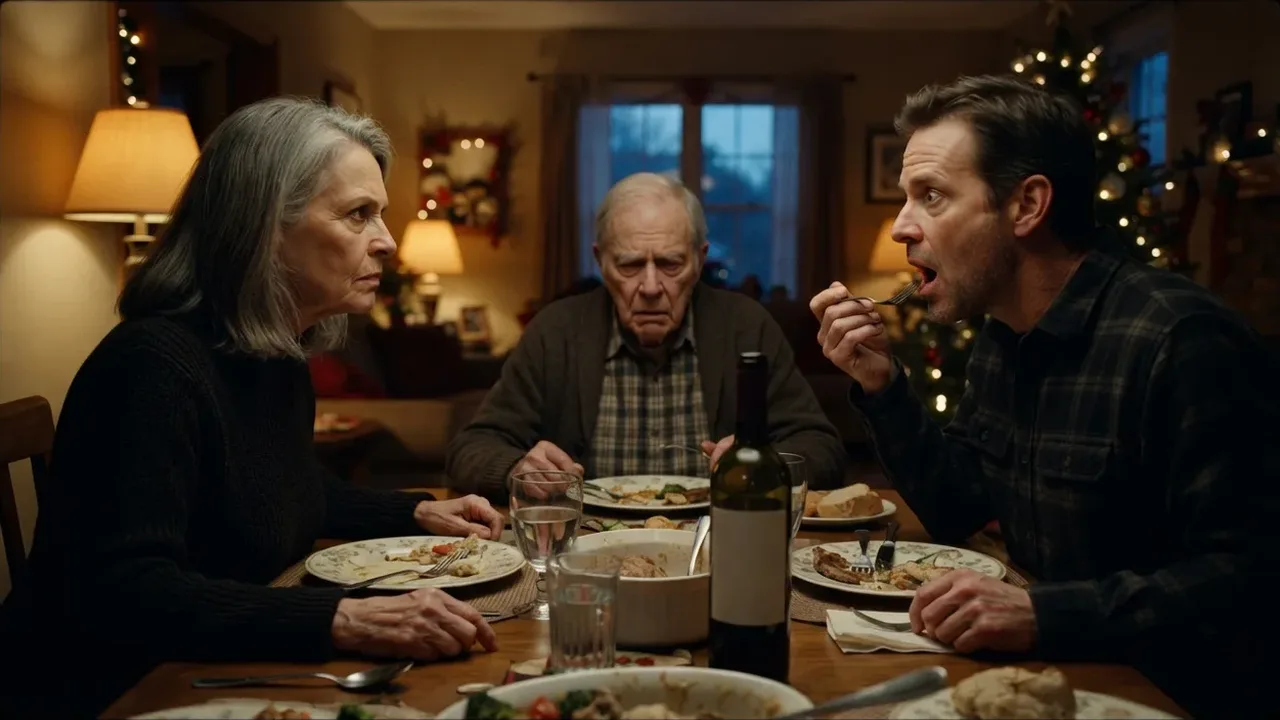
"There is no CD," I said. "That paper came off my own printer. Boyd, I'm asking you one more time. Where did eleven thousand dollars go?"
"Not tonight, Mar."
"Mom," Shelby said, "it's Christmas."
"I know what night it is. I've given up my table for it." I kept my hands in my lap. "Since the sixth of November I've slept in a hat. I paid the furnace deposit out of my sister's money. I've eaten dinner in this house instead of mine. And every time I ask, I'm told it's safe."
"It is safe," Boyd said.
"Then where is it?"
He looked at his fork and said nothing. Her husband cleared his throat and became very interested in the pie server.
"All right," I said. "Then here's what I did. On Monday I mailed Kip a check for a thousand dollars. That's the rest of my Arizona money. If you're going to keep secrets in this marriage, Boyd, I am done keeping your promise for you."
Shelby's chair scraped back. "Mom, you didn't."
"I did."
"He'll lose it, same as last time. That's why we had the rule. Dad made the rule, and you agreed to it, and now you're—"
"He'll send it back," Boyd said.
He had put his fork down. He said it low, and Shelby stopped.
"He doesn't need it," Boyd said.
I looked at him. "Why doesn't he?"
He pressed the heel of his hand against the tablecloth, as if he were smoothing a map. "I was in the front room, Mar. October. The Monday he called. I heard you tell him no and I heard you in the pantry after." His jaw worked. "I never heard anybody cry like that, and I made you do it."
Nobody at the table breathed.
"The Friday I went to the bank at nine," he said. "Took a cashier's check, eleven thousand, made out to his mortgage company. After the VA I drove to his house and paid what he was behind. He was two payments from losing it." He let that stand. "He put the tires on my truck. That was all he would take from me."
"The card," I said. My throat had gone tight. "That Christmas card."
"It was to me. I stood it on the mantel so you'd think it was yours."
I sat very still. I had hung up on my son and wept over a card that was never mine, and the man I had been sure was hiding something shameful had been the one to keep the roof over our boy's head.
"You made me promise," I said. "You said not another dollar."
"I did, and I broke it first." He wouldn't look up. "I made you be the one who said no, Mar. Couldn't stand you knowing I was the soft one."
Shelby had gone pale and quiet, with her car keys still in her fist. "Why did nobody tell me Kip was losing his house?" she said at last.
"Because you'd backed me," Boyd said. "I figured you'd be ashamed of him."
"Dad." She put her keys on the table, and it seemed to cost her. "I would've wanted to know."
Boyd took a long breath. "Every account I opened alone goes back in both names after Christmas. Checking, all of it." He turned to me. "The Ford tractor goes on the sale board at the feed store. The furnace is still eight hundred dollars short past the thirty-six hundred we have. The tractor covers it."
"And Kip?" I said.
He took his phone out of his shirt pocket, found the number, and held it to his ear in front of all of us. I heard it ring twice through the carols from the kitchen. "Kip. It's your dad." He listened. "No, she's fine. She's right here. Listen, come tomorrow for Christmas dinner at Shelby's. Bring your wife. No, I want you to." He listened again, and his shoulders came down by an inch. "I'll tell her."
He set the phone beside his plate. "He says he got your check, Mar, yesterday. He's mailing it back."
"He can mail it back," I said. "I'll hold you to all three, Boyd. The names, the tractor, and him at the table tomorrow."
"I know you will."
Shelby rubbed her eyes with the heel of her hand. "Okay, so," she said, in a smaller voice than I'd heard from her since she was ten. "Honey. Two more chairs from the basement. Mom, I'll need you for the extra potatoes in the morning." She cut a piece of shoofly pie and slid it in front of me, and I ate it.
Back in our kitchen on Ridge Road the space heater was ticking against the cold, and the house smelled of dust burning off the coils. Midnight was close. Kip's card still stood in the middle of the mantel where Boyd had set it, and I took it down and held it.
Boyd stood in his stocking feet with his cap in one hand. He took his phone out with the other, opened the bank's app, and typed in his password. He thumbed past a screen and turned it toward me.
Savings. $3,600. Underneath, in small gray letters, were both our names.
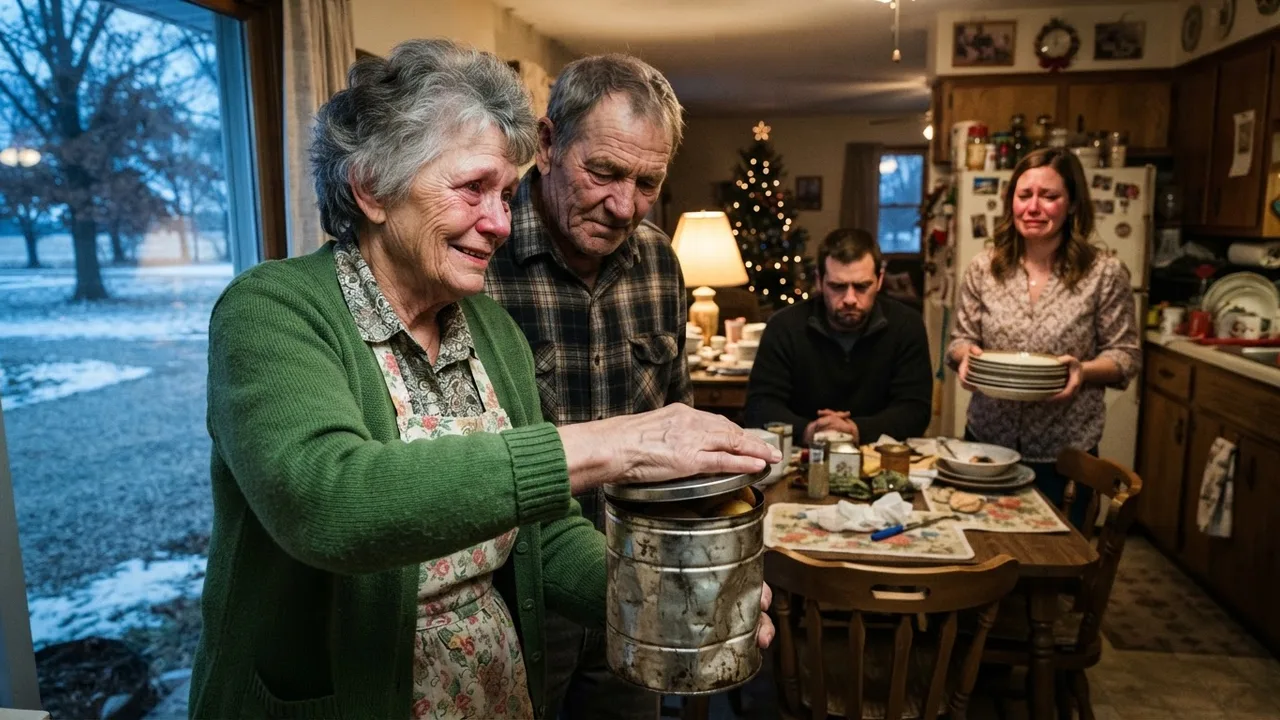
Comments