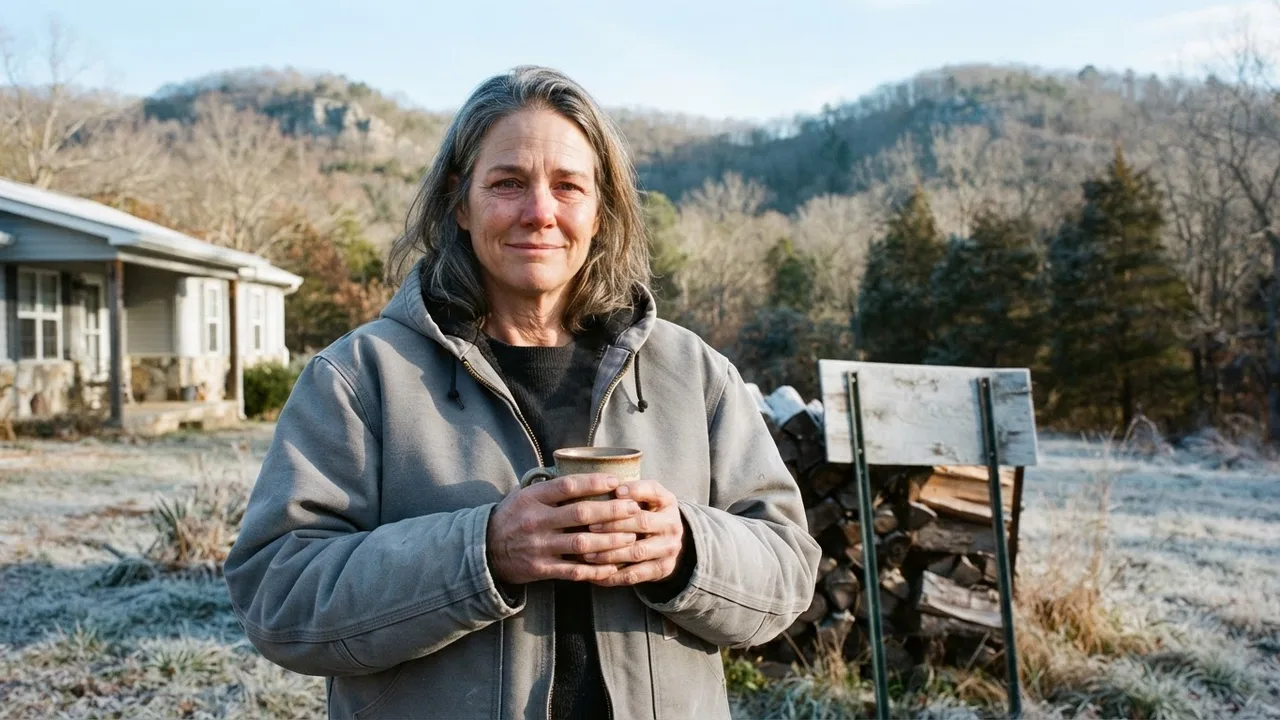
The For Sale sign for Daddy's house was lying face down in the bed of my brother's truck, and that house on Sawmill Ridge Road was the only home I had.
"Listen," Earl said, coming around the tailgate before I could lift it. "Don't touch that till I explain."
He had brought a load of split oak, as he did most Sundays once the cold set in. The sign lay across the top of it, its metal stakes poking at the sky and a realtor's name printed on the back. Earl's realtor friend, a man he had played ball with in high school.
"Explain what," I said.
"Daddy's agreed to Cedar Glen. It's the place by my house, five minutes off. He moves in January 5." Earl pulled off his canvas coat, then put it back on. "He said yes after what you told me the night he fell."
I stood there with a cold stick of oak in my arms. "What did I tell you?"
"That you were done, Renee. Hon, I'm not blaming you. Nobody would."
I had said a good many things that night, in the dark, crying so hard I could barely work the phone. *Done* was not one of them. I carried the oak to the porch and stacked it, because stacking was something to do with my hands, and then I went inside.
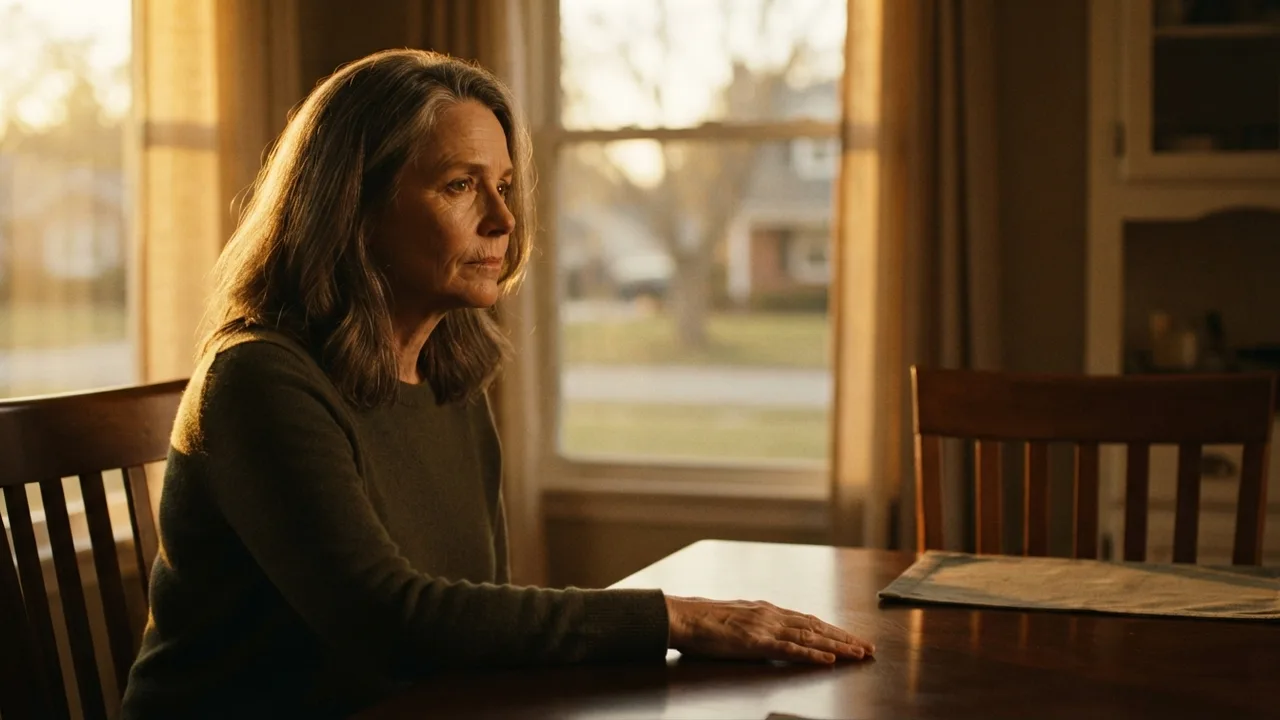
Daddy sat at the kitchen table in his pressed shirt buttoned to the collar, his cane hooked on the chair back. His right hand shook against the oilcloth. I said his name and he looked at the salt shaker.
"Daddy, I never asked to be shut of you."
"I won't be your millstone, sister." He said it gently, which was worse. "You've got a life waiting somewhere."
Earl stood in the doorway and said nothing. Nobody said anything about the sign. I put the kettle on and fed him supper and cut his pork chop, and he let me, and he never once met my eyes.
That night I lay awake listening to the house tick and settle. Around midnight I got up and wrote the day in my notebook, the way I wrote every day: *Dec. 7. Ate half his chop. E. brought oak. Sign.* I looked at that last word for a long time.
---
Six days later Dawn came up the porch steps first, in her red Christmas cardigan, her casserole carrier held out in front of her like a shield.
"Hon, it's only a little chicken and rice," she said, and hugged me with the carrier still in one hand. She smelled of hairspray and good intentions. I let her.
Earl followed with a folder. He set it on the table and opened it to a form with an apartment address on it, over the hardware store on the courthouse square in Mountain View.
"First month's paid," he said. "Seven hundred twenty-five dollars. I wrote the check Thursday. You can walk to the Dollar General, the library, everything."
"I have a house."
"It's Daddy's house, Renee. And it's going on the market."
I looked at Daddy. He sat with his coffee cup in both hands to steady it, and he finally looked at me, and what I saw there was relief. That cut deepest. He was relieved that someone had picked a place for me.
"Take it, sister," he said.
My brother had chosen where I would live and paid for it, and my father had signed on. I thanked Dawn for the chicken and rice. I did not touch the folder. It sat on the table all through supper, and Earl kept glancing at it like a man watching a pot.
---
The nurse from Cedar Glen came on a Tuesday in a quilted vest, with a tablet and a tape measure. The nurse was kind to everyone, which made it hard to hate her.
She measured the bathroom doorway. She watched Daddy rise from his recliner, and I stood close behind him with my hands ready, as I did forty times a day. She wrote something down.
"Mr. Tackett, how are you managing here?"
"My girl has done her time," Daddy said. "She's earned her rest."
I was standing right there. The nurse gave me a look of such plain sympathy that I went into the kitchen and ran water over a clean glass.
That night Daddy went down the hall with his cane and I followed, as always, to steady him at the bathroom door. He turned in the doorway and said, "I can manage, sister."
The lock clicked.
I had never heard that lock turn in all the years I had lived there. I dragged the hall chair against the wall and sat in it with my coat over my knees, listening to the water run and stop, the cane tap, the toilet, the long quiet. I listened until the window went gray. Every time I shut my eyes, I saw him on that tile floor with his legs folded under him, looking up at me.
---
Thursday I opened the mail at the kitchen table, as I had every day since Mama died. Twenty-two years at the bank teaches you that paper is where trouble starts, and that a person who opens it is a person who sees the trouble first. I slit each envelope, stamped each one with the date, and filed it in the accordion folder by the phone.
One envelope was thick, cream-colored, with a green leaf on the corner. *Cedar Glen Assisted Living. Welcome to our family, Mr. Tackett.*
The letter inside thanked Daddy for the $2,500 deposit received on November 3, holding Suite 14 in his name. It gave a move-in date of January 5 and listed an email for questions, which was not Daddy's. Daddy had no email.
Earl's email, I thought, and then I stopped thinking and went for my notebook.
I turned the pages back to November. There it was, in my own plain hand: *Nov. 15. 2:10 a.m. Fell in bathroom. Could not lift him. Called E. E. here about 3:00.*
The fall came on the fifteenth. The deposit had come twelve days before it.
I sat very still. The kettle ticked as it cooled, and I counted the way I used to count bills back across the counter, once and then again. I did not tell Daddy. Whatever Earl had told him, he had kept it from me, and I had no idea how much of it he would hold onto against a piece of paper.
I put the letter in my purse and waited for Sunday.
---
On Sunday I drove the forty miles to Batesville and found Earl on the loading dock behind the farm-supply store at closing. He was dragging a pallet of fifty-pound feed sacks under the awning, his neck sunburned red even in December. The light over the dock had just come on.
"Renee? Daddy all right?"
"He's fine. I came to talk to you." I held out the letter. "Cedar Glen took your deposit on November third. Daddy fell on the fifteenth."
He did not take the paper. He got his glasses off the cord around his neck and put them on and read it where I held it.
"They weren't supposed to mail anything to the house," he said.
That was the first thing out of his mouth. Not *what is this*, not *I can explain*. I stood on the concrete and let it sit between us.
"You told me Daddy said yes after the fall," I said. "You told Daddy I said I was done."
"I was only holding a spot." He took the glasses off. "Places like that fill up, Renee. A suite opens once a year. I put money down so there'd be somewhere when we needed it."
"Before he fell."
"Before, after, what's the difference?"
"The difference is I cried on the phone and said I didn't know how much longer I could lift him. That's all I said. I never said I wanted him gone." My voice was shaking, and I let it. "Tuesday night he locked the bathroom door against me. Because of your story."
Earl turned toward the feed sacks, then back. His face had gone the color of the brick.
"You did say it," he said. "Not those words, fine, but you said it. You gave up your job and your whole life for that house, and you stand there at fifty-two with no husband and nothing of your own, and somebody had to say it out loud. I'm the one who said it."
"You said it to him. Behind my back."
"Because you'd have lied about it!"
A truck went by on the highway. A pigeon shifted in the rafters.
"All right," Earl said, quieter. "I'll pay the apartment. Five more months, three thousand six hundred twenty-five dollars, on top of what I've already put in. You get your own place, Daddy gets looked after, and nobody's sore at anybody. Let him go, Renee."
"No."
"I'm bringing the papers Christmas." He picked up a feed sack and set it down again. "He'll sign. You know he will."
I folded the letter into my purse and walked to my truck. I did not look back, and I did not cry until Mountain View.
---
On Monday I drove to the Ozark Hearth Home Care office on the highway, a one-room place with a space heater and a poinsettia, and sat across from the woman at the desk.
"Three mornings a week, five hours each, nineteen dollars an hour," she said. "Our aide can start January 5. Most families pay month to month, but you can pay ahead."
"Four weeks ahead."
She ran the figure. "Eleven hundred forty dollars."
I wrote the check from my savings, the account I had built teller's-window-style, a little from every paycheck, forty dollars at a time for years. It was sixty-four hundred dollars. Writing that check left me five thousand two hundred sixty. I did not need a calculator. I signed the Ozark Hearth agreement, and The woman gave me a receipt, and I held it all the way home.
---
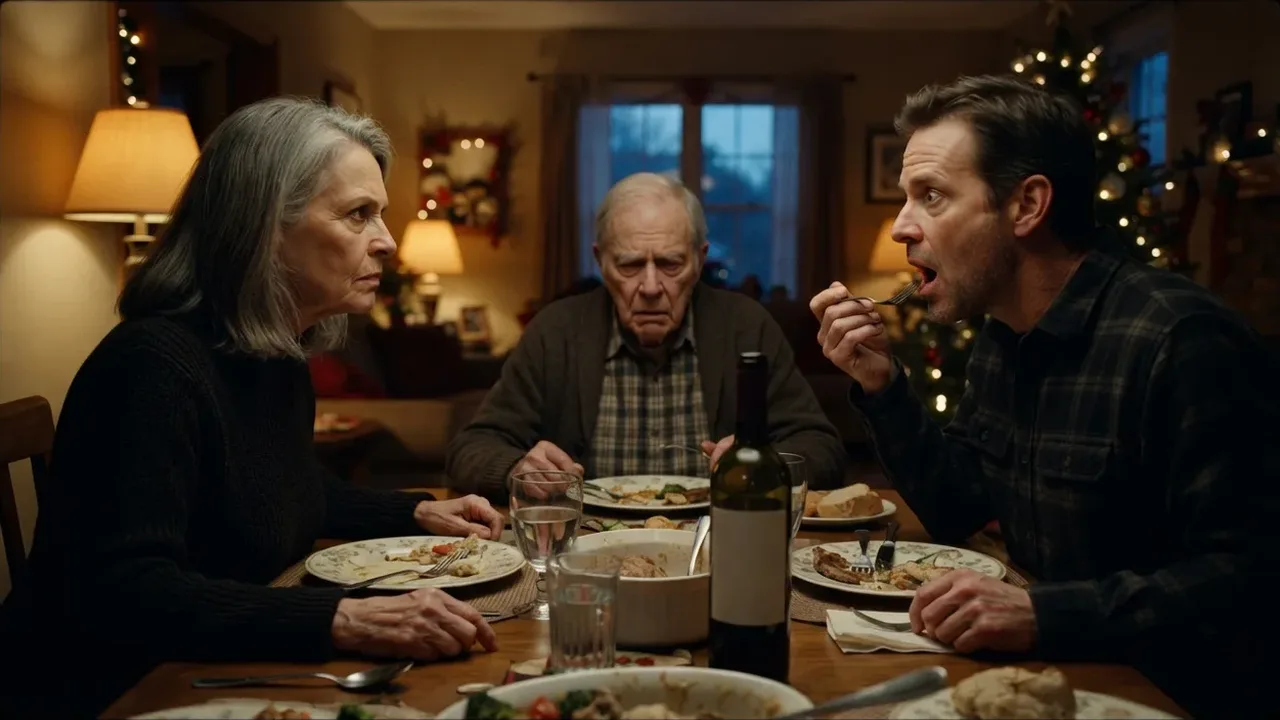
Christmas dinner was at Daddy's table, as it had been every year. Dawn brought her carrier and a green bean casserole. Earl brought a ham from the store and a flat leather folder, which he set on the counter and did not open. We ate. I cleared the plates, and Dawn brought out the pecan pie, and Daddy ate his with great care, the fork shaking.
Earl waited until Daddy set the fork down. Then he laid a stapled agreement beside Daddy's pie plate, with a pen on top.
"Cedar Glen admission, Daddy. January 5. All it needs is your name."
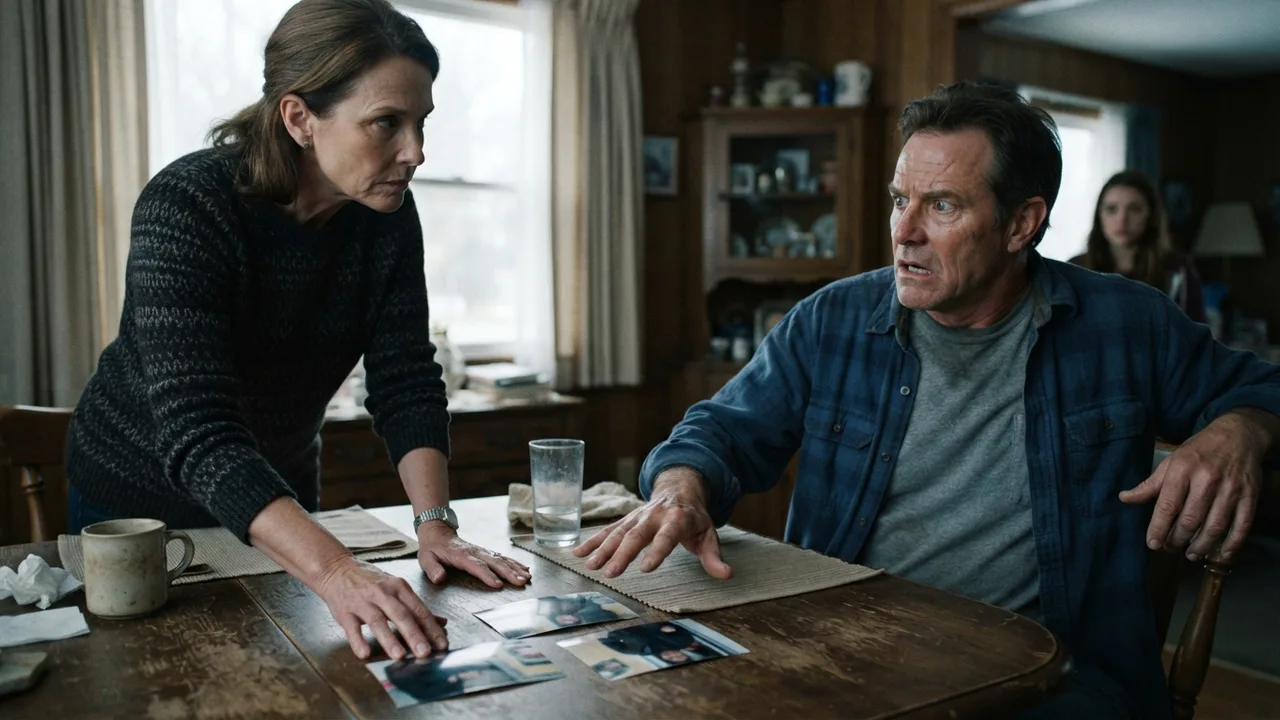
I rose from my chair. I put the Cedar Glen welcome letter on the table, then my notebook, open to November 15, then the Ozark Hearth agreement with the $1,140 receipt clipped to it.
"Daddy," I said, "read the top of that letter."
He took his glasses from his shirt pocket and read it slowly, his lips moving.
"Earl reserved your room on November third," I said. "You fell on the fifteenth. I wrote it down that night, 2:10 in the morning, the same as I write everything." I put my finger on the line. "Twelve days before I said a word to anybody."
Daddy looked at his son. Earl looked at the pie.
"I did cry that night," I said. "I did say I didn't know how much longer I could lift you. That's still true, Daddy. I can't lift you alone. But I never asked you to go anywhere. So I hired help for three mornings a week, starting January 5, and I paid the first month myself."
"I was only holding a spot," Earl said. "Somebody had to think ahead."
Dawn set down her coffee cup. It rattled in the saucer.
"Earl," she said, in a small voice, "you told me you'd start calling places that Monday. After he fell. That's what you said to me. That Monday."
He turned to her. "Dawn."
"I'm only saying what you said, hon."
The kitchen was so quiet I could hear the refrigerator. I did not feel like winning. I looked at my brother, and I thought of the night Mama died, and all at once I knew what I was looking at.
"Earl, you were on the highway when Mama died," I said. "You drove forty miles with the phone going in your pocket, and I was the one who was here. You've been trying to move Daddy within reach ever since. Not to get rid of me. To never take that call again."
Earl's mouth worked. He pulled off his glasses and pressed the heel of his hand against one eye.
"I can't take that call again from forty miles away," he said. "I can't, Renee." He breathed. "The deposit's gone, twenty-five hundred. I have to call Cedar Glen and tell the realtor I'm pulling the listing. I have to tell him my sister was right. And I'll keep driving forty miles to see my father, same as I have."
Daddy pushed the agreement back across the oilcloth with two shaky knuckles.
"I'm not signing it, son," he said. "Tell your friend I'm not selling." He turned to me. "I let my boy decide for me. And a stranger's going to help me wash. That's my cost, sister, and I'll pay it."
"It's only the aide," I said. "She's got a good name."
"Does she cut a pork chop?"
"She does what I tell her."
Daddy laughed, short and dry, the first time I had heard it since Thanksgiving. Earl folded the agreement in thirds and slid it inside his coat.
---
They left in the early dark, Dawn carrying her empty carrier and hugging me twice. Earl went down the porch steps without a word and stopped at his truck. I stood in the doorway.
He reached into the bed, took out the sign, and carried it across the yard to the woodpile, the oak he had split and hauled up here. He laid it face down on the ground.
"It's yours to burn or keep," he said, and drove away.
On Saturday the phone buzzed while I was wiping down the counter. Earl's name. I let it ring out, then played the message once, standing at the sink.
"Renee. It's me. Daddy's got the heart appointment the sixth. I'd like to drive him, if you'll let me. And I'd like to talk. Call me when you can."
I set the phone on the counter. Daddy was dozing in his recliner with the cane across his knees. Through the window the woodpile stood gray in the first light, and the sign lay in front of it, face down, rimmed with frost, the way it had lain in the truck bed on the Sunday I first saw it.
I did not play the message a second time. The phone sat there next to the salt shaker, and I went to see about Daddy's coffee.
Comments