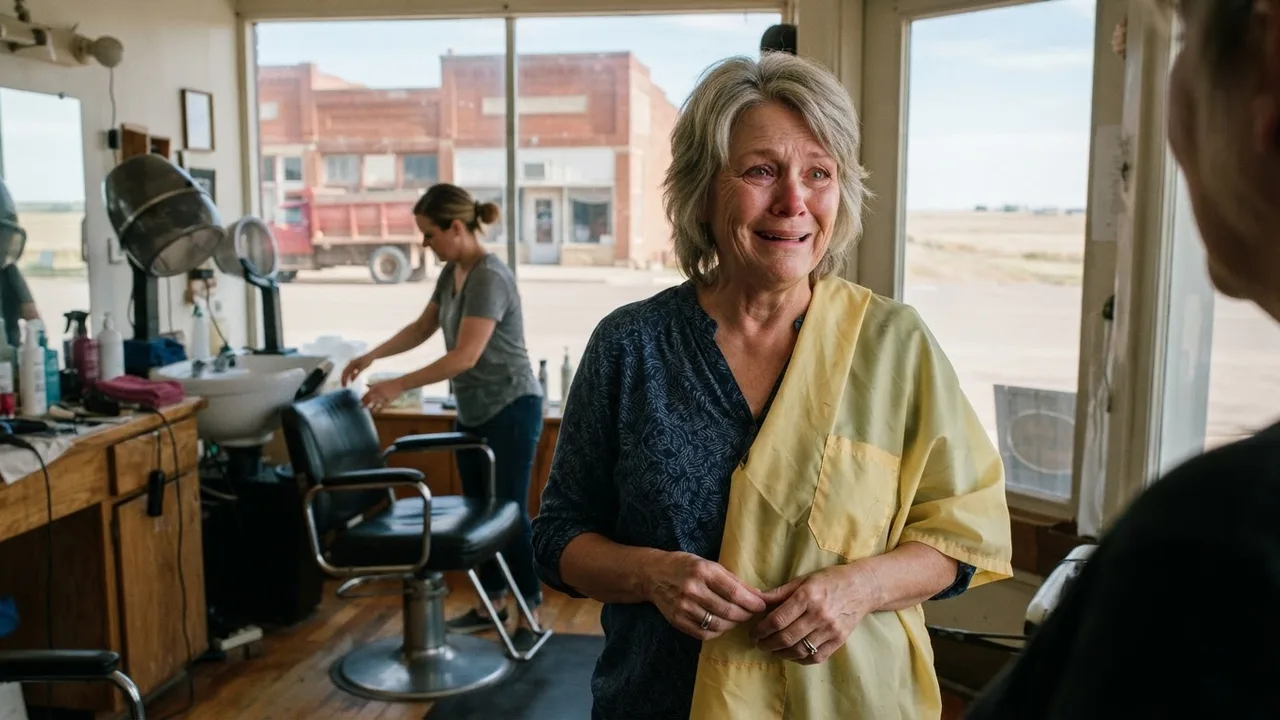
Mr. Ambrose stood in the doorway of my shop and told me I had until Halloween to get nineteen years of other people's hems out of his building.
He held his straw fedora in both hands. I had a Coast Guard trouser leg under the needle, a mouthful of pins, and $2,600 in savings, and there was not another room in Darien I could pay for.
I took the pins out one at a time. "Say that again, Royce."
"Wanda." He looked at the cutting table, then the ceiling, then the gold letters of my name on the front glass, backward from where he stood. "Marjorie's place in Brunswick runs seven thousand a month. I've got a buyer. He wants the building empty. Short-term rentals, for the tourists."
"And?"
"And your month-to-month ends October thirty-first. That's seventy-eight days."
"You counted them."
I set the pins in the cushion and waited.
"I counted them all week," he said.
It was a Friday, hot enough that the fan on the shelf only pushed the heat around. I had paid him $650 a month on a handshake since my written lease ran out, and he had never once been late coming to say good morning.
"Your khakis are done," I said. "Tuesday, if you want them."
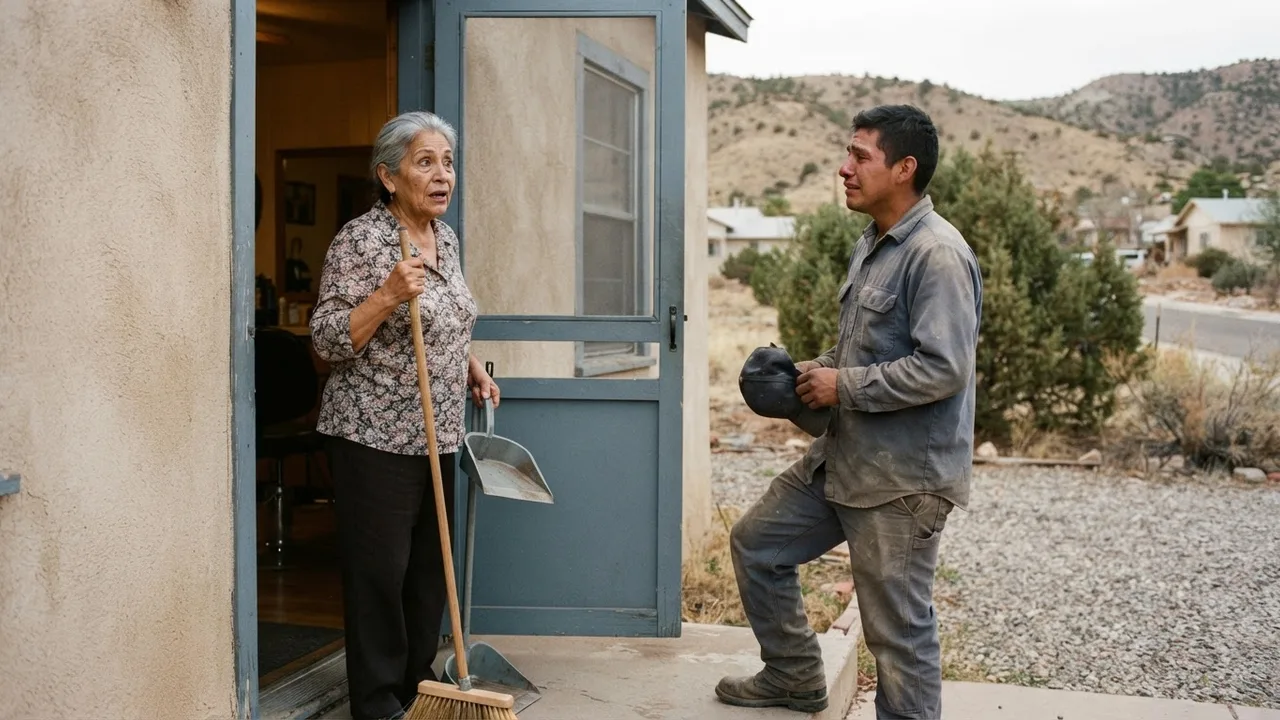
"Wanda, I'm sorry. I didn't know how to—"
"I know you're sorry. Hand me that chalk."
He handed it over. His fingers shook a little. I marked a hem that did not need marking, and I let him stand there in my doorway with his hat until he understood I wasn't going to help him out of it.
---
My daughter drove down from Savannah eight days later, on a Saturday and started in before the door had shut behind her.
"Mama, listen." Lanyard around her neck, car keys in her fist, the way she held them whenever she meant to leave and wouldn't. "There are about ten weeks left before Halloween. This shop will be boxes long before that. The back room's ready. You close, you come to Savannah, you stop worrying me."
"I'm hemming," I said, and I was. Coast Guard blues, a quarter inch off the break.
"You found a space?"
"Front Street. Three thousand three hundred up front."
"You have that?"
"I have most of it. I'd sell the Juki for the rest." I did not say how much most of it was.
Kayla picked up the spool of red thread from the table and held it like evidence. "You're still sewing redbirds into strangers' pants."
"My mother did it. I've done it in everything since I was nineteen."
"I know. Even the funeral-suit boy."
I told it anyway, short. A gray Goodwill suit, a boy of fourteen who had lost his daddy, three nights after closing at Seaside Cleaners with the shears and a seam ripper, the redbird in the left cuff so he'd have something to hold on to. I said nothing about the fourteen dollars or where it had come from.
"That's my point," Kayla said. "You give your time away. You always have. Now look at you."
"Sugar, I'm not asking for a rescue."
"Nobody's rescuing. I'm asking you to be sensible." She dropped the thread. "Post the closing notice. Let me put it up online. Customers need to know."
We fought another quarter hour over it, the kind of fight where both of us knew the words by heart. In the end I said she could post it, and I said I'd think about Savannah. I thought about it that night with the ceiling fan going round, and I did not sleep.
---
The man who came in the last Saturday of August was big and quiet, in a contractor's work shirt gone soft from washing. He carried one pair of tan trousers over his arm.
"Need these taken up, ma'am."
"Stand on the box."
He stood. He did not look at me. He looked at the ceiling joists, the doorframe, the place where the plaster met the brick. I knelt with my pins and thought, There's the buyer's man, sent to see what he's paying for.
"How long you been here?" he asked the rafters.
"Since 2007."
"It's a good room."
"It's rented. Twelve dollars for the hem, and no, I don't go faster for contractors."
"Yes, ma'am."
I took longer than I needed to, out of spite. When I finished the hem I put a redbird inside it, small and red, same as always, and folded the trousers without a word. He paid the twelve dollars in ones. At the door he put a hand on the frame, just for a second, and then he was gone into the heat.
I was ashamed of how short I'd been, and then I forgot about it, because I had a hundred things to box.
---
Yesenia came in the first Saturday in September with her hair still in its net from the morning shift at the shrimp plant. She stood by the door and didn't come any further.
"Miss Wanda, my motor burned out." She laughed, the nervous laugh. "Three gowns. Quinceañeras. They're due end of September, and I've got the deposits already spent on satin."
"Sit."
"Okay, okay. I'll figure it out. I could rent time at somebody's—"
"Who's going to rent you time on a machine that'll take satin?"
She had no answer. She had careful hands, and she was twisting them.
I had a buyer lined up for the Juki. Nine hundred dollars, and with my $2,600 that made $3,500, enough for the Front Street deposit due Tuesday. I had the whole sum worked out on the back of an invoice, in pencil.
I looked at the Juki. It sat under the window like a good mule.
"Call your cousin," I said. "The one with the truck."
"Why?"
I pulled the dust cover off the shelf and shook it out over the machine.
"Because that machine's going home with you."
"How much?"
"Nothing."
Yesenia took a step in and stopped, her net-covered head shaking. "Miss Wanda, no. I can pay you fifty a week—"
"You can't, and I won't take it. Call him."
The truck came at four. Her cousin and I carried the Juki down the step, and I watched it ride away over the railroad ties with a blue tarp flapping on it. On Monday I called the buyer and told him never mind. On Tuesday the deposit date came and went, and I let it.
---
The next Saturday I was boxing at closing time, half the shelves already bare, when the big man from August walked back in. He carried a garment bag over his shoulder.
"Ma'am."
"I did your hem. Is it coming out?"
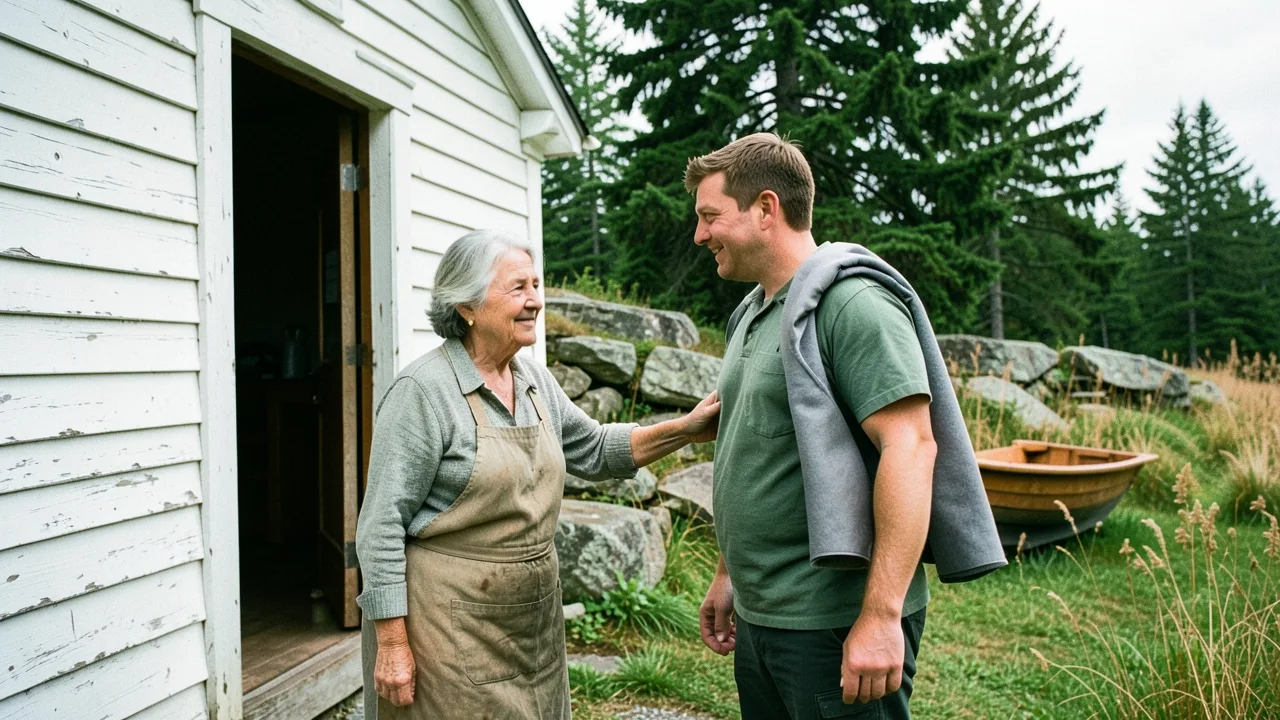
"No, ma'am." He laid the bag across my cutting table and unzipped it. Inside was a boy's gray suit jacket, old and flat and shiny at the elbows. He turned back the left cuff. A faded red cross-stitch, no bigger than a thumbnail.
"You put a redbird in it," he said. "You put one in my work pants the last Saturday in August, too."
I took my glasses down out of my hair. "Mister, I've put a redbird in everything for thirty-three years. Half of Glynn County is walking around in them."
"Seaside Cleaners, March 2005. My daddy was killed on 17. My mama came in her aide's uniform with a borrowed suit that was no good, and you said you'd see." His hand went to the tape measure on his belt and touched it. "You told me to keep my hand on this cuff at the grave if I got scared. I did."
I did not say anything. Then I remembered a boy who could not stand still for a pin, who had stared at the floor of that back room with his mouth pressed shut, and my knees went out and I sat on the stool.
"My mama kept the claim ticket," he said. "She tells it every Easter. Your daughter's post said you started at Seaside Cleaners. Mama saw it and called me in Jacksonville."
"You kept a fourteen-dollar suit," I said, "for twenty-one years."
"It never fit anybody else." He looked at my doorframe. "I'm a contractor now. I build things. Do you have a garage, ma'am?"
There it was. "I do. And I am no charity case. That suit cost fourteen dollars."
"It wasn't fourteen dollars to me."
I picked up the pincushion and set it down again.
"Go home, Mr.—"
"Darnell."
"Go home, Darnell."
He zipped the jacket into the bag and put it back on his shoulder. He laid a business card under my pincushion where I'd set it down. "I'll be back with my tape, so you can tell me no to my face."
I sat there a long time after the truck pulled off. The card said OGLETREE REMODELING, and I did not touch it.
---
He came the next Saturday at closing, as he'd said, tape on his belt. I told him I'd show him the garage so he could stop wasting his gas.
It took three minutes to drive. Fort King George Drive, my cinder-block ranch, and behind it the little detached garage with no power run to it. I rolled up the door. Christmas boxes to the rafters, a wreath on a nail, the gnats rising out of the dark.
"It's a shed full of Christmas," I said. "There's no power."
He walked it slowly, looking at the walls, not at me. Then he unclipped the tape and held out the dumb end.
I took it. I pressed it to the block wall without thinking about it, the way I'd held a hundred yards of ribbon for a hundred customers.
"Eleven feet," he read off. "Twenty-two and a half. Room for two machines and a cutting table."
"Darnell."
"I lost my company in 2019," he said, still reading the wall. "Bad contract. A man gave me a bench in his shop, free. I took it because I had a boy to feed." He let the tape run back in. "My son's ten. He asked why we keep a jacket nobody can wear. I'd like to tell him the rest." He looked at me finally. "You held that end just now without thinking. That's all I'm asking."
I stood there with my arms folded. The light came in through the open door onto the Christmas boxes.
"Then here's how it goes," I said. "I pay for every board and every wire. I work beside your crew. Your men's work pants come to me for hemming from now on, and I'll hear nothing about that."
"Yes, ma'am."
"Don't ma'am me."
"Yes. Wanda."
"And I'm giving up the storefront on Broad Street for a garage at the end of my driveway." I said the rest to the wreath. "That's my savings, and that's my front window."
He put out his hand. I shook it. It was a carpenter's hand, hard as a plank, and it held mine like something he did not want to bend.
---
The first cool morning of fall came on the third of October. The gnats were still out where the sun hit, but the air had an edge, and Darnell's truck sat in my side yard with lumber stacked on the grass. His men had studs up on sawhorses. Yesenia, whom I'd asked to help clear the garage, was walking Christmas boxes across the lawn two at a time.
Kayla pulled in at nine. She had been to Broad Street first, found my note on the door, and come on out, her keys already in her hand. She stopped at the edge of the grass.
"Mama? Whose truck is that?"
"Darnell Ogletree's. Kayla, come here. Everybody put down what you're holding."
Yesenia set down a box marked TREE SKIRT. Darnell laid his pencil on a sawhorse.
"I gave the Juki to Yesenia," I said. "I didn't sell it. I let the deposit on that Front Street space go by. My savings were never more than twenty-six hundred, and I didn't tell you." Kayla opened her mouth and I kept going. "And the funeral-suit boy you've heard about all your life is standing right there. That fourteen dollars came out of our groceries. The spring you were nine, we ate grits and eggs for a week."
Nobody moved. Darnell said, quietly, "I've still got the jacket at my mama's house, Miss Kayla. It never fit anybody else."
Kayla looked at him, and then at me. She wiped her face with the back of her wrist.
"That was the week I thought you were being stingy," she said. "I remember. I thought you'd lost your mind over a pack of cheese."
"Kayla."
"No, listen. You spent money you didn't have on a stranger. You gave away your machine. And you wouldn't take help from your own child, Mama. From me."
"I'm not taking this for free." I pulled the receipt out of my shirt pocket and held it out. "Twenty-four hundred dollars. Drywall, wire, insulation. Out of the same savings. I'll be hanging it myself."
She read it. She read the total, and then she read it again, and her mouth worked.
"I painted the back room yellow," she said. "I bought a bed for it. And if I say yes to this, it's twenty more years of driving down on Saturdays to worry about you."
"You can bring a casserole."
She laughed, a wet one. Then she put her keys in her pocket, walked across the grass to where one of Darnell's men was holding up a sheet of drywall, and took the other end.
"Where does it go?"
---
We hung drywall. Nobody said anything about it. Darnell's electrician friend came at noon and ran a line from the house to the garage for my machines. Yesenia asked if she could rent the corner bench on Saturdays, and I said we'd see about it, which she took for yes. Darnell mentioned that his crew had eleven pairs of work pants waiting. I told him I charged twelve a hem and he said, "Yes, ma'am," and I let him have it.
The first week of November, I told Kayla, I would open by appointment, with a home-business license from the city, and customers could follow me a mile and a half up the road if they wanted me.
By dusk the garage had walls. Kayla swept sawdust into a pile with my own push broom. Darnell packed his tools back into the truck bed one by one, touching the tape on his belt once, as if checking it was still there.
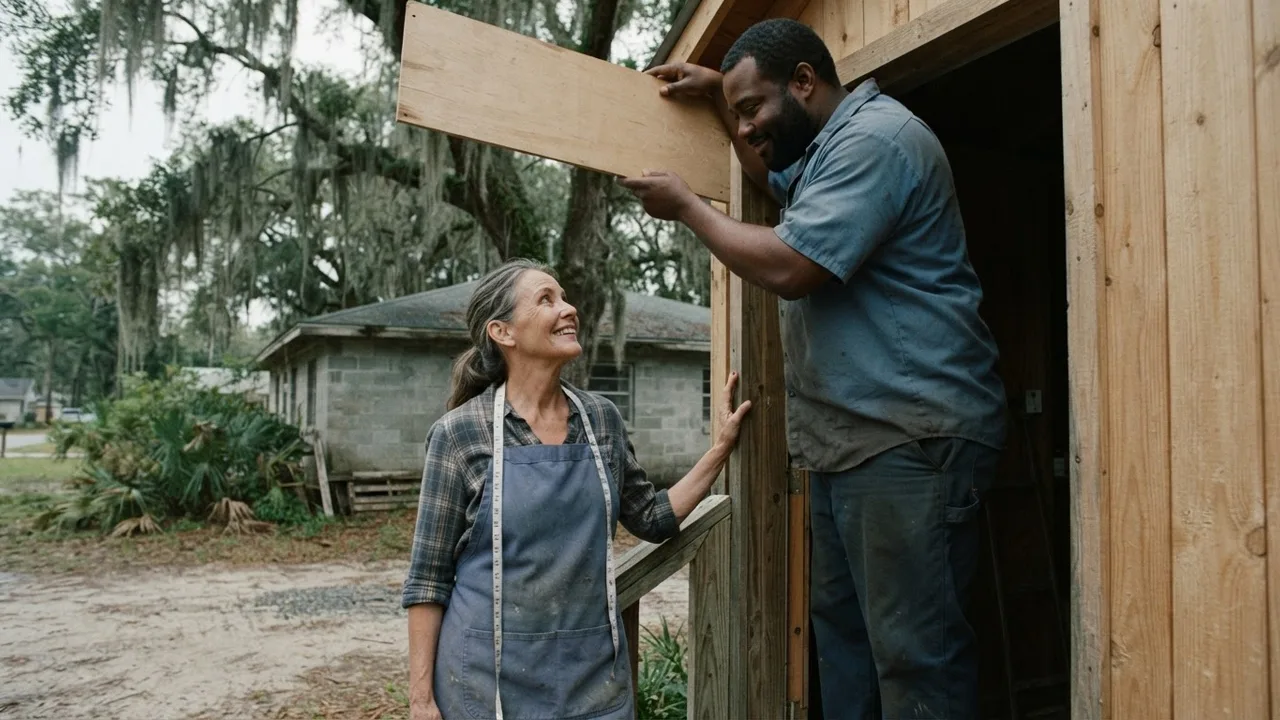
The sign had been leaning against the house since the evening before. I had taken it down myself, off a kitchen chair, with a butter knife for the screws that had been rusting in since 2007. It took me forty minutes, because my hands would not hurry, and I drove it home across the back seat with one end out the window. STRICKLAND ALTERATIONS, the gold gone dull at the corners.
Kayla carried it over now. I stood in the raw new side doorway Darnell had framed that afternoon, the studs still pale and smelling of pine. Kayla lifted the sign up to him, and he held it level over my head.
"A little left," I said.
He moved it a little left.
Comments