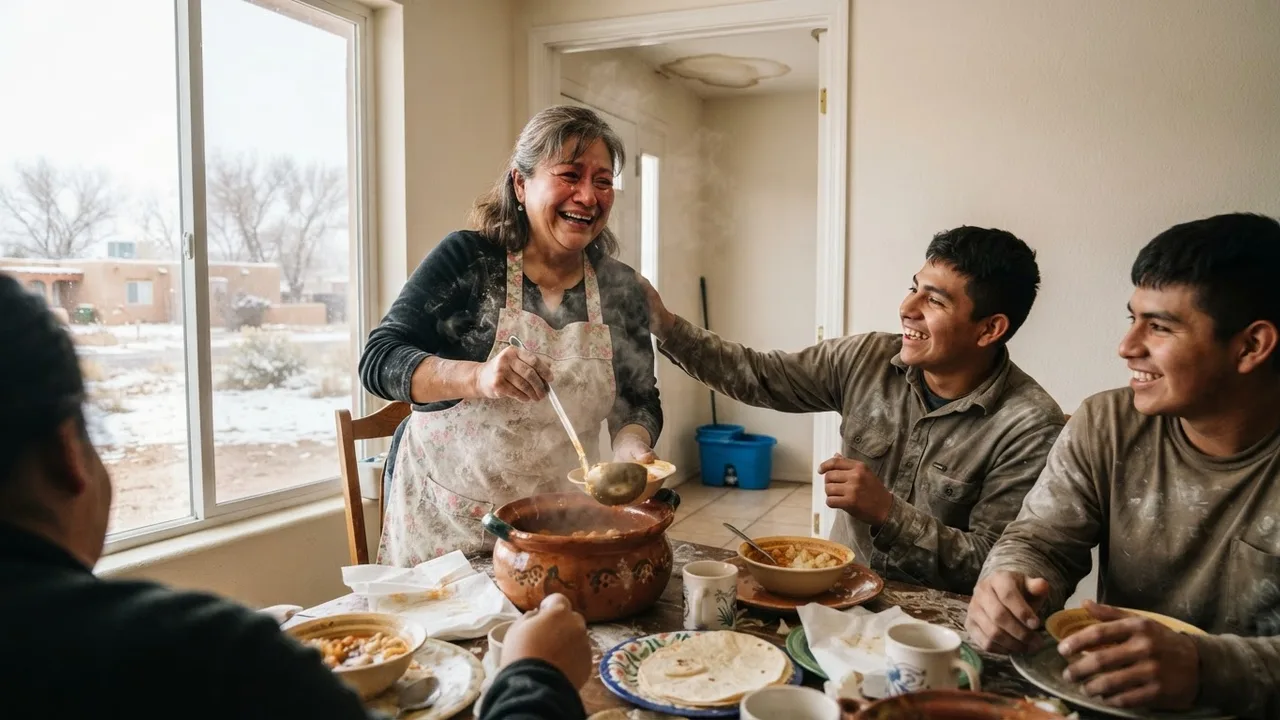
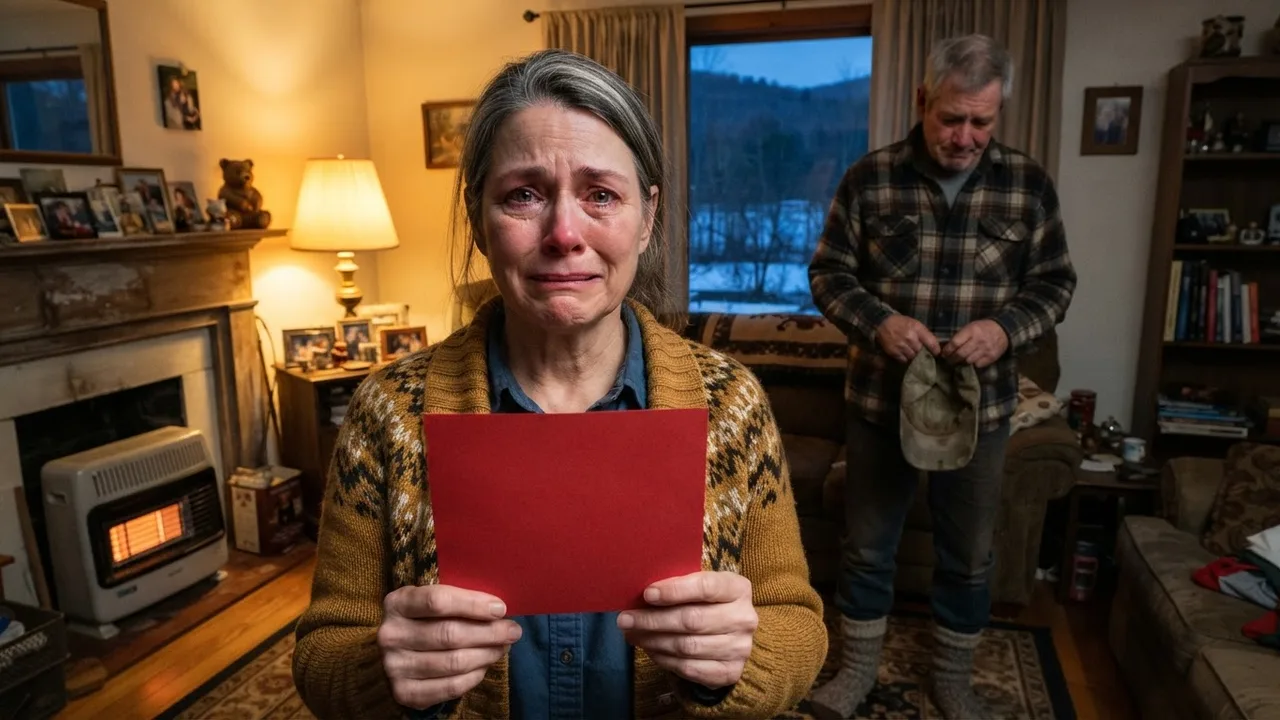
The letter came on the first of November and gave me sixty days: replace the roof Ernie had patched every spring for twenty-two years, or lose the insurance, and with it, sooner or later, the house.
I read it at the mailbox and again at the kitchen counter, then slid it under the takeout menus. In the front hallway the blue mop bucket sat under the stain, where it had sat since the September rains. I had $4,200 in savings and told nobody.
"Here's the thing, hon," Phyllis said that Wednesday, and she turned her poinsettia aside so she could see me over the folders. Her office on California Street was a mile from my house, and I had walked it after school with my cardigan pockets full of tissues. "The inspector photographed every slope. The roof is past its life. I've called four carriers, and not one will write it."
"And January first?"
"Your lender buys a policy and adds it to your payment. About $4,100 a year. Call it $340 a month." She tapped the folder. "The only way back is a licensed contractor's invoice for a full replacement and dated photos, in my inbox by December 31."
I laughed, because that is what I do. "Ernie always said one more spring."
"When did you last call a roofer, Irma?"
My face went hot. "Not since the funeral."
Phyllis didn't say anything kind about that, which I was grateful for. I went home and lay awake listening for rain that didn't come.
That Friday at Escondida, I was reading the same line of the letter in my head while I stamped late slips when Shawna Begay came in with her newborn in a sling and her kindergartner's backpack on one shoulder.
"I'm so sorry, Mrs. Lucero. I know there's a form."
"There's always a form, mija. Sit down, I'll do it." I filled in the early sign-out for her boy, Dax, and came around the counter to look at the baby, a red-faced scrap with a fist against his cheek. "Hey there, Frijol."
"His name's Marcus," Shawna said, smiling.
"That's what I called a little one once. He slept in a laundry basket at the foot of my bed, one winter, a long time ago." The phone rang. I held up a finger to her and picked it up, and the morning moved on without that baby in it.
A roofer from Socorro walked my roof the following Wednesday and wrote $14,800 on the back of his card. I thanked him and made coffee I didn't drink. The Tuesday after that, I sat at the kitchen table and typed a post into the Socorro community group, asking for an honest roofer who would take payments, and I signed it with my name. Asking strangers was easier than asking my son.
Two days later Shawna came into the office with mascara down her cheeks, laughing at herself the way she does when she's close to the edge.
"The fuel pump died. The shop wants $460 before they'll give me my car, and if I miss another 5 a.m. shift at the truck stop, I'm done."
"Get your things," I said. "I'll drive you after the bell."
At the garage on the north side I put my debit card on the counter before she could finish opening her purse. "Mrs. Lucero, I can't—"
"It can wait until spring." I said it brisk, the way I'd say it about a library book.
In the parking lot, with her taillights going off toward the interstate, I did the subtraction. $3,740. I sat in my car with the heater running and felt exactly like a woman who had just spent her roof.
Saturday morning I was raking the yard in Ernie's old canvas coat when a white truck with Las Cruces plates stopped at my curb. A man got out and photographed my roofline. Broad shoulders, a cap, a sunburned nose. He studied my roof for a long time and then my front step, and then he came up the walk.
I had the screen door latched before he reached it.
"Ma'am. I'm sorry to bother you. I do roofing." He took off his cap and turned it in his hands. "Could I get up and look at your decking?"
"I've heard that one. Storm comes through, and you fellows drive in for the widows." I didn't open the latch. "Why would a Las Cruces roofer drive 150 miles for a stucco house in Socorro?"
"I was in the area." He swallowed. "How long have you lived in town, ma'am?"
"Long enough to know a number's coming that I can't pay." I told him he could look from the ground.
He was on my roof for twenty minutes anyway, and when he came down he stood at the step with his mouth open as if a sentence had gotten away from him. Then he held a card through the gap in the door. Desert Line Roofing, with *Rafael* written under it in pencil.
"I'll call," he said, and left without giving me a number at all, which bothered me more than a bad one would have.
Thanksgiving was in Albuquerque, seventy-five miles up the interstate. Joaquin had cooked a turkey breast and set out a store-bought pie, and before we ate, he walked me down the hall to a room painted the yellow of a school bus.
"Mom, just listen." He shoved his hands in his pockets. "There's a closet, there's a window on the garden, and I'm ten minutes from the school. You sell the house, you put the money in the bank, you stop—"
"Stop what?"
"You can't keep that place up alone."
I set my fork down hard enough to ring the plate. "I've kept it up for twenty months without you."
"That's not what I—"
"You think I don't know my own house?" I said, and stopped. His face went still. I picked up my purse. "Thank you for the pie."
I drove home in the dark with my jaw locked, the cattle guards rattling under the tires and my father-in-law's rosary swinging from the mirror. It was the first real fight I'd had with my son since his father died, and I'd started it.
On the ninth of December Phyllis called me in again. She didn't turn the poinsettia aside this time.
"The last carrier declined. The deadline stands. The door is open until the 31st if you can get the roof done, hon, but I'm not going to pretend I see how."
"I'll list the house in January," I said.
That evening I called Joaquin. "I've decided to sell."
"Mom, really?" His voice cracked with gladness, and it cut me worse than the quarrel had. "Why now?"
"It's time," I said, and he let that be the answer.
On Friday a number I didn't know rang my cell. "Ma'am, it's Rafael. I left a card. May I come by tomorrow? There's no charge."
"I'm not paying for a quote."
"No, ma'am. I only want to talk."
He came Saturday morning in a clean shirt, and I let him in because I was tired. He sat at my kitchen table with his cap in his hands, and I put out coffee and noticed a black tar stain on his thumbnail.
"I looked at your roof," he said, and now he talked easily, about slope and flashing and a soft spot over the hall. "It needs a full tear-off. Materials are $3,600. Labor's nothing. It's my crew."
I stood up. "What's the catch?"
"There's no catch."
"Young man, nobody gives away a roof." I went to the door and held it. "Who are you?"
He didn't get up. "My mother was Yolanda Ortega. She washed dishes at the Rio."
"I knew a lot of girls at the Rio."
"You gave her your bed," he said quietly, "and slept on the couch with your feet hanging off the end. I slept in a laundry basket at the foot of it." His voice shook. "You called me Frijol."
I let go of the door. I sat down. The kitchen clock ticked, and somewhere down the street a dog barked at nothing. The little black-haired girl with a belly like a drum and a grin that came out sideways was all at once there at my table, and he had her chin.
"Where is she?" I said.
"She died in July. Cancer. I've got a daughter of my own now, two years old." He turned the cap. "She made me promise to find you. I looked for months, Irma-and-the-Rio-Café, and got nowhere. You'd married. Then my foreman showed me a post that a woman in Socorro had shared into a contractors' group. It said Irma Lucero. I opened your page and it said Irma, Baca in parentheses, and Rio Café under your old jobs." He almost smiled. "I drove up that Saturday and lost my nerve at your screen door."
"I took you for a storm-chaser," I said, and my eyes ran over. I wiped them with a tissue from my cardigan. "Rafael, I didn't do it so a bill would come due."
"It's not a bill. It's the only thing she ever asked me for."
"I can't take a whole roof from a boy I last saw when he was a baby."
He stood and put his cap on at the door, then took it off again. "I'll be at your curb at seven on Christmas Eve with two men and the material. If you say no, I'll turn the truck around."
Joaquin came Tuesday evening with flattened moving boxes in his trunk. I saw them when he lifted out his duffel, and I said nothing, and he slept in his old room while I lay awake with Rafael's number written on the back of an envelope.
At seven the next morning, a diesel engine idled outside my window. By the time I had my shoes on, Rafael's truck was at the curb with a trailer of roll roofing and two men standing beside it in the cold. Joaquin came out of the hall in his socks, rubbing his face.
"Mom? Who is this?"
I went out to the driveway and he followed, and I told him all of it there, with the frost still on the Buick. The letter, then Phyllis, then the $14,800 quote. The $460 for Shawna's car, and the post. Then the winter of 1997, Yoli, the couch, the $300 I'd put aside for classes at New Mexico Tech that went on groceries and a car seat, the baby I called Frijol.
Joaquin stood with his hands jammed in his pockets. "I never knew any of it."
"I know."
"You told a Facebook group before you told me." His voice went thin. "Your own son, Mom."
"After your father died you drove down every weekend for eight months," I said. "I swore I would never make you carry me again. That was wrong. I should have let you."
Nobody said anything. One of Rafael's men coughed into his glove. Then I took out my phone, because there was one more thing, and I did it in front of both of them. I opened my bank app and typed in $3,600, and sent it to Desert Line Roofing. It left me $140.
"Your labor," I told Rafael. "My materials."
He nodded, and his throat moved. "Yes, ma'am."
I turned to my son. "I'm not coming to live in your yellow room, Joaquin. I want you to come home to this one."
He looked at the ground. "Dad said yellow was your color. I painted it for you. I already told everybody at school my mother was moving up." He rubbed his eyes with the heel of his hand. Then he walked past me to the hook inside the garage door, took down his father's canvas coat, and pulled it on. The sleeves stopped short of his wrists.
"Where do you want me?" he asked Rafael.
All day he carried rolls up the ladder and old roofing down it beside Rafael's men, while I made coffee and stood in the yard with my hand shading my eyes. At noon Rafael sat beside him on the ridge with a sandwich I'd handed up, and I caught what he said, because the day was so still.
"She'd have wanted to be up here."
Shawna came at five with Dax and the baby in the sling, for the posole I'd invited her to weeks before. She took one look at the dusty men in my yard and tied on my apron without a word, and set out bowls while I ladled. By dark the roof was done. We ate at the table in our work clothes and our good ones, hardly talking, and Joaquin's shoulders were stiff with the day. I photographed it from the street with the porch light on, and Rafael wrote his invoice at my table, with *paid* across the bottom in his square printing. I emailed both to Phyllis. Her answer came while I was washing bowls: *Got them. You're covered, hon.*
At the door Rafael stopped with his cap in hand. "She kept your return address from that Easter letter for years. In a kitchen drawer."
My hand went to the doorframe. "I wish she'd used it."
"She said you'd earned a better letter than she could write."
"Bring your little girl in the spring," I said. "Sit at this table. Tell me everything about her. Everything."
"Yes, ma'am," he said. "I will."
Christmas night, after the house was quiet and Joaquin was snoring in his boyhood room with the moving boxes still flat in the trunk of his car, I went out to the front hall in my slippers. I lifted the blue mop bucket out from under the stain and looked in. It was dry. I carried it to the kitchen and put it away under the sink.
Comments